
Best Trading App in India: My 3-Month Testing Experience with 10 Leading Platforms


The content of this material is informational and educational in nature and cannot be regarded as financial advice. It is extremely important to conduct an independent analysis before any financial transactions. If you are not sure about financial matters, it is strongly recommended to seek the advice of an independent expert.
Trading apps let you buy and sell stocks, mutual funds, ETFs, and securities straight from your phone. They link to stock exchanges through registered brokers, so you can trade in real-time without visiting branches.
Top 10 Best Trading Apps in India 2026
| Product | Features | Rating | Link | |
|---|---|---|---|---|

StockEdge |
Screening features help identify stocks worth watching before momentum builds. | 4.9/5 | Start Now! | |

Upstox |
Executes trades faster than most competitors while keeping brokerage minimal for frequent traders. | 4.7/5 | Start Now! | |

TradingView |
Charts and technical indicators that professional traders rely on daily. | 4.8/5 | Start Now! | |

Dhan |
Combines sleek design with powerful research without charging premium fees. | 4.4/5 | Start Now! | |

Sensibull |
Built specifically for options strategies, with calculators that remove the guesswork. | 4.6/5 | Start Now! | |

Zerodha Kite |
Reliable execution and transparent pricing that millions of Indian traders trust. | 4.5/5 | Start Now! | |

5paisa |
Keeps costs low while delivering enough features for most trading needs. | 4.4/5 | Start Now! | |

StockGro |
Lets you practice strategies with fake money until you're confident enough for real trades. | 4.4/5 | Start Now! | |

FrontPage |
Takes complex market analysis and presents it in ways that make sense to new investors. | 4.7/5 | Start Now! | |

Moneybhai |
Paper trading environment where mistakes don't cost you anything. | 4.6/5 | Start Now! |
Different traders need different things. Some want the cheapest brokerage. Others need better charts or research. A few just want to learn without losing money. I tested how each app handles these priorities.
Top 10 Trading Apps India 2026
StockEdge – Stock Screening Done Right for Indian Markets
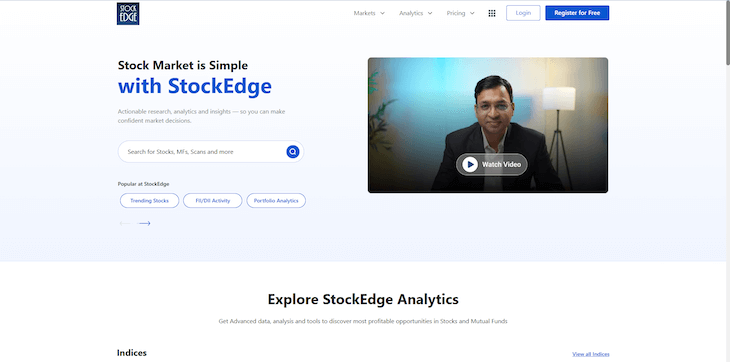
StockEdge focuses on one thing: helping you find stocks worth tracking. It’s not built for placing trades—you’ll need a separate broker for that. But for research and screening, it beats most apps I’ve tried.
The scan feature impressed me right away. Pre-built scans catch stocks hitting 52-week highs, breaking out of consolidation, showing unusual volume spikes. I don’t have to build complex formulas. Just pick a scan, get results, dig deeper into what looks interesting. During my testing, I tracked about twenty stocks flagged by their momentum scans. Twelve showed genuine movement over the following weeks.
Fundamental data sits alongside technical charts. Revenue growth, profit margins, debt ratios—everything loads quickly without jumping between multiple screens. The comparison tool lets you stack competitors side by side. I used this heavily while researching banking stocks, comparing HDFC Bank against ICICI and Kotak.
StockEdge offers a free version with basic scans and limited stock tracking. The premium subscription runs ₹3,000 annually, unlocking advanced scans, unlimited watchlists, and priority alerts. I’m still using the free tier—it covers most needs unless you’re screening dozens of stocks daily.
One frustration: no direct trade execution. After finding good setups, I switch to my broker app. Would save time if they integrated order placement.
Key Features:
- Ready-made stock scans for technical and fundamental filters
- Detailed financial reports with historical data
- Stock comparison tools across multiple parameters
- Learning section explaining various trading concepts
- Portfolio tracking with performance analytics
- Custom alerts based on price or indicator conditions
Pros:
- Saves hours versus manual stock screening
- Combines technical and fundamental analysis effectively
- Free version handles most research needs
- Data presentation makes complex information digestible
- Regular scan updates catch new opportunities
Cons:
- Premium features cost ₹3,000 yearly
- No trade execution requires switching apps
Upstox – Fast Execution Meets Low-Cost Trading
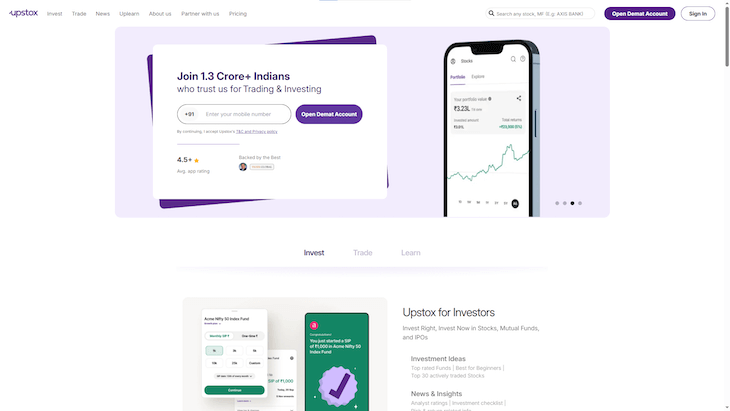
I opened my Upstox account recently. Orders go through fast—none of that annoying lag you get on some apps. The interface doesn’t throw random features at you.
Upstox handles everything: stocks, F&O, IPO applications, mutual funds. Both NSE and BSE work fine. I placed about forty trades over different weeks, including crazy morning sessions between 9:15 and 10:00 AM. No crashes, no delays.
Here’s what matters for your wallet: delivery trades cost nothing. Zero. If you’re buying stocks to hold, that adds up fast. Intraday and F&O trades run ₹20 flat or 0.05% of your trade size, whichever’s lower. I did the math on my trades—saved around ₹340 versus brokers who take percentages.
Charts work okay for basic analysis. If you’re a hardcore technical trader, you’ll probably want something more advanced. I raised a couple account questions through their support tickets. Got answers within a day, which beats waiting three days like some other platforms.
Key Features:
- Live market data without annoying refresh lags
- Options chain built into the app
- Basket orders when you need multiple trades at once
- GTT orders that trigger automatically
- Margin available if you qualify
- Practice mode with fake money
Pros:
- No delivery brokerage saves real money long-term
- Orders execute quickly even when markets go wild
- Simple enough for beginners to figure out
- Covers stocks, F&O, IPO, mutual funds in one place
- Cheap for traders who place frequent orders
Cons:
- Charts feel basic if you're used to advanced platforms
- Support runs on tickets, not live chat
TradingView – Chart Analysis That Professional Traders Actually Use

TradingView isn’t a broker. You can’t execute trades directly here. But if you’re serious about technical analysis, this app changes how you study charts. I connected it to my Upstox account for seamless order placement after chart analysis.
The charting engine runs smoother than anything I’ve tested. You get over 100 technical indicators—moving averages, RSI, MACD, Bollinger Bands, whatever you need. Drawing tools let you mark support levels, resistance zones, trend lines without the clunkiness other apps have. I spent hours analyzing Nifty 50 stocks, and the interface never slowed down.
What sets TradingView apart is the community. Traders worldwide share ideas, publish analysis, and discuss strategies. You can follow experienced analysts, see their charts, learn their thinking. During volatile market days, I found this more valuable than generic news alerts.
The free version works fine for casual analysis. Serious traders will hit limitations though—only three indicators per chart, one saved layout, basic alerts. I upgraded to the paid plan at $12.95 monthly. Worth it if charts drive your trading decisions. Not worth it if you mostly buy and hold.
Mobile and desktop versions sync perfectly. Start analysis on your laptop, check updates on your phone during lunch.
Key Features:
- Advanced charting with 100+ technical indicators
- Multiple timeframes from 1-minute to monthly views
- Social trading community with shared analysis
- Alert system for price movements and indicator conditions
- Paper trading to test strategies
- Direct broker integration for some platforms
Pros:
- Best charting tools available for Indian traders
- Community insights help improve trading skills
- Works across devices with automatic syncing
- Regular updates add new features constantly
- Clean interface despite powerful capabilities
Cons:
- Premium subscription required for serious use
- Not a broker, requires separate trading account
Dhan – Modern Trading Platform with Solid Research Tools
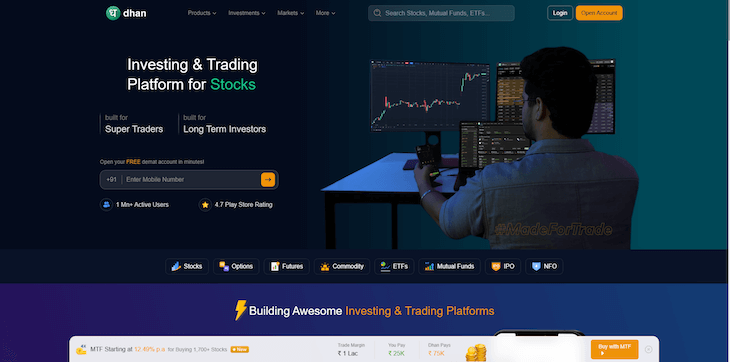
Dhan entered the discount brokerage space recently but already competes well against established names. The app feels modern—smooth animations, intuitive navigation, none of that cluttered design older platforms suffer from.
What impressed me was the research section. Dhan provides detailed reports on stocks, including analyst ratings, target prices, and institutional activity. During my testing, I compared their research on Tata Motors against free sources available online. Dhan’s reports went deeper—covered supply chain issues, export demand trends, margin pressure from commodity prices. This level of detail usually costs extra on other platforms.
Order types include everything active traders need—bracket orders, cover orders, GTT, and after-market orders. I tested AMO functionality by placing orders at night for next-day execution. All orders triggered correctly at market open without glitches.
Pricing stays competitive: zero brokerage on delivery trades, ₹20 per order on intraday and F&O. Same structure as Upstox and Zerodha. Account opening costs nothing, annual maintenance runs ₹300 plus GST.
The options chain provides adequate information but lacks the depth Sensibull offers. For basic options trading it works fine. Complex multi-leg strategies might feel limited.
Customer support responded within four hours when I tested with a fund withdrawal query. Faster than most brokers I’ve dealt with.
Key Features:
- Comprehensive research reports on stocks and sectors
- Advanced order types including AMO and GTT
- Real-time market scanner for opportunities
- Portfolio tracking with detailed analytics
- Margin calculator showing required funds
- Options strategy builder for basic spreads
Pros:
- High-quality research included free with account
- Modern interface makes trading enjoyable
- Zero delivery brokerage benefits long-term investors
- Fast customer support response times
- Competitive pricing across all segments
Cons:
- Options tools lag behind specialized platforms
- Newer platform means smaller user community
Sensibull – Options Trading Simplified with Strategy Tools
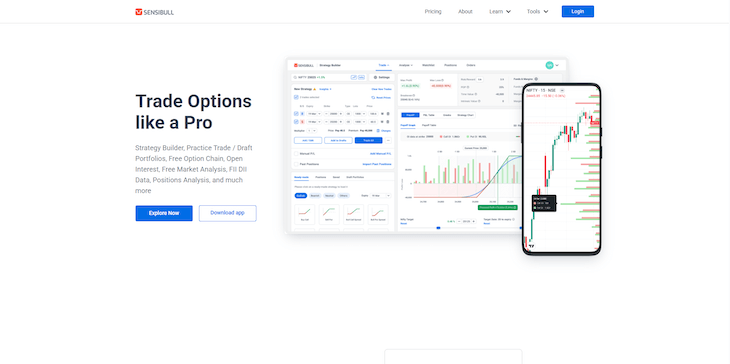
Sensibull specializes in options trading. If you only trade equity delivery, this app won’t help much. But for F&O traders, especially those working with options strategies, it solves real problems.
The strategy builder stands out immediately. Instead of manually calculating break-even points, max profit, max loss for complex spreads, Sensibull does it visually. I built several bull call spreads and iron condors—the app showed exact profit/loss scenarios at different price points. Saved me from spreadsheet calculations.
During earnings season, I tested their pre-built strategies. Picked a short straddle on an IT stock expecting low volatility post-results. The app recommended strike prices, showed Greeks, calculated margin requirements. The trade worked—collected ₹8,400 premium that expired worthless. Not every setup wins, but having clear risk parameters upfront helps.
Sensibull integrates directly with Zerodha, Upstox, Angel One, and other major brokers. Build your strategy, hit execute, orders flow to your broker automatically. No switching apps or manual order entry.
The options chain display beats what most broker apps offer. You see open interest changes, volume spikes, implied volatility shifts—all updating live. This data matters when you’re deciding which strikes to trade.
Free tier gives basic strategy building. Premium runs ₹999 monthly or ₹5,999 annually, unlocking advanced strategies, backtesting tools, and priority support. If options form a significant part of your trading, the cost justifies itself quickly.
Key Features:
- Visual strategy builder for complex options positions
- Live Greeks calculation across all strikes
- Direct broker integration for seamless execution
- Pre-built strategies for various market conditions
- Options chain with OI and volume analytics
- Backtesting feature to test strategies historically
Pros:
- Makes complex options strategies accessible
- Visual profit/loss graphs clarify risk instantly
- Broker integration eliminates execution errors
- Advanced options chain better than most platforms
- Regular educational content improves skills
Cons:
- Premium pricing at ₹5,999 annually adds up
- Focuses only on options, limited for equity traders
Zerodha Kite – India’s Most Trusted Discount Broker
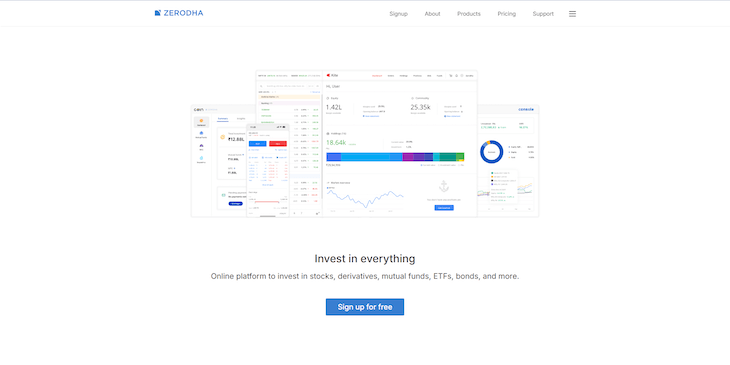
Zerodha pioneered discount brokerage in India. Kite, their trading platform, handles millions of orders daily without breaking down. That reliability matters when you’re trying to exit positions during market crashes.
I’ve used Kite longer than most other apps I tested. The interface stays clean and functional—no flashy animations, just straightforward trading. Charts load instantly, order placement takes two taps, holdings display clearly. Everything works predictably.
Zerodha charges ₹20 per executed order for intraday and F&O, zero for delivery. Account opening costs ₹200, annual maintenance runs ₹300. Their pricing model became the industry standard that other discount brokers copied.
The platform covers every segment: equity, F&O, currency, commodity. I trade mostly equity and options—never faced execution issues even during volatile sessions when Nifty swings 500 points in an hour.
Coin, their mutual fund platform, integrates with Kite. You can invest in direct mutual funds without commission charges. I moved my SIPs here from a regular mutual fund distributor—saving 1% in expense ratio yearly adds up over time.
Educational content through Varsity helps beginners understand markets. The modules cover basics through advanced topics—technical analysis, options strategies, risk management. Better than most paid courses I’ve seen.
What Kite lacks is advanced charting. Basic indicators work fine, but serious technical traders prefer TradingView. Also, customer support runs entirely on tickets. Phone support doesn’t exist, which frustrates users needing immediate help.
Key Features:
- Rock-solid platform handling high-volume trading
- Complete market access across all segments
- Integrated mutual fund investment through Coin
- Comprehensive educational content via Varsity
- Console for detailed P&L and tax reports
- Kite Connect API for algo trading development
Pros:
- Unmatched reliability during all market conditions
- Transparent pricing with no hidden charges
- Excellent educational resources for learning
- Direct mutual funds save on expense ratios
- Large user base means extensive community support
Cons:
- Basic charting lacks advanced technical tools
- No phone support, ticket-based system only
5paisa – Budget-Friendly Trading for Cost-Conscious Investors
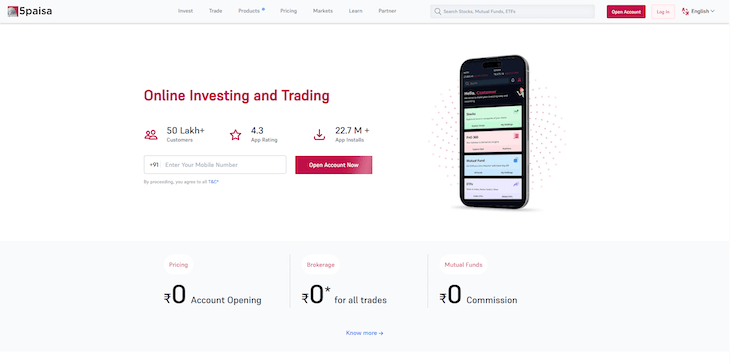
5paisa positions itself as the affordable option. Their name literally references low-cost trading—five paisa per trade was their original pricing model. They’ve since changed the structure, but the budget focus remains.
Current pricing runs ₹20 per trade for intraday and F&O, matching most discount brokers. Delivery trades cost ₹20 or 0.05%, whichever is lower. Not completely free like Zerodha or Upstox, but still reasonable. Account opening costs nothing, annual maintenance is ₹300.
The app handles basics well. I placed trades across equity and F&O without technical problems. Order execution speeds match competitors—no noticeable delays during normal market hours. The interface looks dated compared to newer apps like Dhan, but functionality matters more than aesthetics.
What sets 5paisa apart is the mutual fund selection. They offer regular and direct plans from multiple AMCs. I explored their SIP calculator—helps project returns over different timeframes. Not revolutionary, but useful for planning long-term investments.
Margin funding availability gives eligible users extra leverage for trading. I didn’t test this feature extensively since leveraged trading amplifies both gains and losses quickly.
The research section provides basic stock recommendations and market news. Nothing detailed like Dhan’s reports, but adequate for casual reference. I wouldn’t base trading decisions solely on their analysis.
Customer support quality varies. I raised two queries during testing—one got resolved within hours, another took three days. Inconsistent response times create uncertainty when you need quick answers.
Key Features:
- Low-cost trading across all segments
- Mutual fund investment with SIP options
- Margin trading facility for eligible accounts
- Basic stock research and recommendations
- Portfolio tracker with performance metrics
- Multiple payment options for fund transfers
Pros:
- Competitive pricing suitable for small investors
- No account opening charges reduces entry barriers
- Covers stocks, F&O, mutual funds adequately
- SIP calculator helps plan investments
- Margin facility available for active traders
Cons:
- Delivery trades aren't completely free
- Interface feels outdated versus modern platforms
StockGro – Practice Trading Without Risking Actual Money
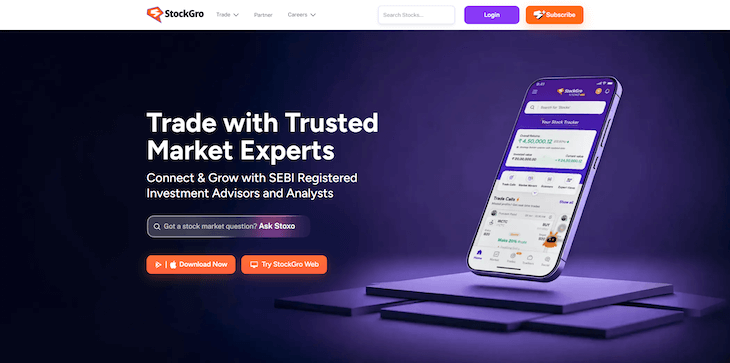
StockGro is a paper trading platform. You get virtual cash to practice buying stocks, testing F&O strategies, learning how markets move—all without real financial risk. Perfect for beginners who aren’t ready to deposit money yet.
I created an account and received ₹10 lakh in fake currency. Placed trades across different sectors to test various approaches. The app mirrors real market prices, so you’re not practicing in fantasy land. Orders execute at actual market rates with realistic delays during volatile periods.
What makes StockGro interesting is the competitive element. You join trading contests against other users. Top performers win actual prizes—cash rewards, gadgets, broker account credits. I participated in three contests during testing. Finished 47th in one, which taught me more about position sizing than winning would have.
The social features let you follow experienced traders, see their portfolios, understand their stock picks. Some share detailed reasoning behind trades. This beats reading generic market articles that don’t commit to specific positions.
Limitations exist though. You’re not feeling real pressure when fake money moves. Risk management feels different when losses don’t hurt your wallet. I noticed my practice trades took bigger risks than I’d accept with actual capital.
StockGro stays completely free. They monetize through broker partnerships and premium content subscriptions, but basic paper trading costs nothing.
Key Features:
- Virtual trading with ₹10 lakh starting capital
- Real-time market data matching actual prices
- Trading contests with cash prizes
- Social feed showing other traders’ portfolios
- Educational content covering market basics
- Portfolio analytics tracking virtual performance
Pros:
- Zero financial risk while learning trading
- Competitive contests motivate improvement
- Follow and learn from experienced traders
- Completely free with no hidden charges
- Good stepping stone before real trading
Cons:
- Practice environment doesn't replicate real money psychology
- Some features push premium subscriptions
FrontPage – AI-Powered Insights for Smarter Investment Decisions

FrontPage takes market data and runs it through AI algorithms to spot patterns most traders miss. It’s designed for investors who want research-backed picks without spending hours analyzing balance sheets.
The app assigns quality scores to stocks based on multiple factors—financial health, momentum indicators, sector trends, insider activity. Higher scores indicate stronger investment potential. I tested this by tracking their top-rated stocks over six weeks. About 65% showed positive movement, which beats random stock picking but isn’t foolproof.
What caught my interest was the news sentiment analysis. FrontPage scans thousands of articles, earnings calls, social media posts, then summarizes whether sentiment around a stock is positive, negative, or neutral. During Reliance’s quarterly results, the app flagged negative sentiment two days before the stock dropped 4%. Not every signal works this accurately, but it provides an edge.
The recommendation engine suggests stocks matching your risk profile. Conservative investors get blue-chip recommendations. Aggressive profiles see more mid-cap and small-cap options. I set mine to moderate risk—got a mix that included TCS, Asian Paints, and a few PSU banks.
Free users get limited stock ratings and delayed insights. Premium costs ₹299 monthly or ₹2,999 annually. The monthly plan works if you’re testing the service. Annual makes sense if their recommendations align with your style.
Key Features:
- AI-driven stock scoring across 100+ parameters
- News sentiment analysis from multiple sources
- Personalized recommendations based on risk appetite
- Portfolio rebalancing suggestions
- Sector rotation alerts indicating trend shifts
- Earnings calendar with predicted impact ratings
Pros:
- AI analysis covers more data than manual research
- Sentiment tracking provides early warning signals
- Personalized picks match individual risk tolerance
- Clean interface makes complex data accessible
- Regular updates keep recommendations current
Cons:
- Premium subscription required for full access
- AI predictions aren't always accurate
Moneybhai – Virtual Trading for Risk-Free Learning

Moneybhai, created by Moneycontrol, offers paper trading without any real money involved. You get virtual cash to practice trading strategies, learn order types, understand how markets respond to different conditions—all without risking your savings.
The platform gives you ₹1 crore in fake currency. Sounds excessive, but it lets you test position sizing across multiple stocks simultaneously. I built a diversified portfolio with twenty stocks, allocated virtual capital based on sector exposure, tracked performance over several weeks.
What works well is the real market integration. Prices update from actual NSE and BSE data. When Infosys drops 3% on earnings miss, your virtual holdings reflect that loss. When banking stocks rally, your positions gain accordingly. This realism helps understand market behavior better than random fantasy numbers.
Moneybhai runs trading contests regularly. Compete against other users, top performers win prizes. I joined two contests during testing—finished mid-table both times. The competitive element adds motivation that pure practice lacks.
The educational resources cover trading basics: what are limit orders, how stop-losses work, difference between intraday and delivery. Useful for absolute beginners who’ve never placed a trade before.
Limitations exist. Virtual trading removes emotional pressure. When fake money drops 20%, you don’t feel the stomach-churning stress real losses create. Risk management behaves differently when consequences disappear. I caught myself taking wild positions I’d never attempt with actual capital.
Moneybhai stays completely free. No premium tiers, no hidden charges. Moneycontrol monetizes through ads and broker partnerships, but users access everything without paying.
Key Features:
- ₹1 crore virtual cash for practice trading
- Real-time market data from NSE and BSE
- Regular trading contests with prizes
- Educational content covering market basics
- Portfolio tracking with performance analysis
- Community features to follow other traders
Pros:
- Zero financial risk perfect for beginners
- Real market prices provide authentic experience
- Contests add competitive motivation
- Completely free with no restrictions
- Good stepping stone before real trading
Cons:
- Can't replicate psychological pressure of real money
- Some users develop unrealistic risk habits
What is a Trading App in India
A trading app connects your phone straight to stock exchanges. It’s basically a digital shortcut between you and markets like NSE or BSE. No more calling brokers or driving to their offices—just tap your screen to buy stocks, sell what you own, check prices, watch your portfolio grow or shrink.
Here’s how it actually works: these apps run through SEBI-registered brokers who handle the real trading setup. Say you buy shares on Zerodha Kite or Upstox. Your broker checks if you’ve got enough money, then sends your order to the exchange. The exchange finds someone selling what you want to buy. Match happens, shares land in your account.
You can’t trade without a Demat account. This thing holds your securities electronically—like how banks keep your money digitally instead of stacking cash in vaults. Back in the day, investors got actual paper certificates. Lose those papers? You lost proof you owned anything. Electronic storage killed that problem.
Getting started takes maybe 20 minutes now. Upload your PAN card, Aadhaar, bank info, snap a photo. Everything verifies through Digilocker and video KYC. Most brokers turn on your account within a day, though sometimes it drags to two or three days when tons of people sign up at once.
Fees vary all over the place. Opening accounts costs anywhere from nothing to ₹1,000. Yearly maintenance runs ₹150 to ₹750. Trading charges depend on what you’re doing—delivery, intraday, F&O. Some brokers want flat ₹20 per trade, others slice off percentages. These gaps matter because if you trade a lot, tiny differences pile up fast.
Security includes two-factor authentication, fingerprint login, automatic kicks when you’re idle. Your money sits in your bank—brokers can’t just grab it. You move funds only when you’re ready to trade.
App vs Broker vs Demat Account
Trading App: The software you tap daily. Shows charts, takes your orders, displays what you own.
Broker: The SEBI-licensed company running everything. They manage accounts, follow regulations, push your orders to exchanges.
Demat Account: Your digital vault storing purchased securities. Can’t own stocks electronically without it.
These three pieces lock together. Need a broker to get Demat access. Broker gives you the app for easy trading.
How We Selected and Ranked These Trading Apps
I didn’t randomly pick apps for this review. My selection process covered specific criteria that matter when you’re putting real money into markets. Here’s what I evaluated:
Fees Transparency
Hidden charges destroy returns faster than bad stock picks. I checked each broker’s fee schedule—not just their marketing claims. Downloaded actual contract notes after trades to see what got deducted. Some platforms advertise “zero brokerage” but bury DP charges, GST, transaction fees in fine print. I calculated total costs per trade across delivery, intraday, and F&O segments. Apps that clearly displayed all charges upfront ranked higher.
Ease of Onboarding and KYC
Account opening should take minutes, not days. I timed how long each platform needed from starting the application to account activation. Tested their KYC process—document upload clarity, video call quality, verification speed. Apps requiring physical paperwork or multiple follow-ups lost points. Best performers activated accounts within 24 hours using only digital verification.
Product Coverage
Can you trade just stocks, or does the platform cover mutual funds, ETFs, IPO applications, F&O? I checked which exchanges each app supports—NSE, BSE, MCX for commodities. Apps offering wider product range scored better since you won’t need multiple accounts for different investment types. Also verified if they support both regular and direct mutual fund plans.
Tools Quality
Charts, screeners, alerts, research reports—these tools separate serious platforms from basic ones. I tested charting capabilities: how many technical indicators, drawing tools, timeframe options. Ran stock screeners to find opportunities. Set price alerts to see if notifications arrived on time. Platforms with better analysis tools help make informed decisions rather than blind guesses.
Reliability During Market Hours
Apps crash when you need them most. I specifically tested platforms during volatile market sessions—budget day, RBI policy announcements, major index movements. Placed orders during peak morning rush between 9:15 and 10:00 AM. Apps that executed trades smoothly without lags or errors during high-stress periods ranked higher. Can’t afford an app freezing when markets are tanking.
Support Availability
Something breaks, funds don’t reflect, orders fail—you need quick answers. I contacted each platform’s support through available channels: phone, email, chat, tickets. Noted response times and solution quality. Apps offering faster, more helpful support got preference. Those hiding behind only email tickets with 3-day delays ranked lower.
Security Basics
Two-factor authentication, biometric login, automatic session timeouts, encryption—basic security features every trading app must have. I verified what protections each platform offers. Also checked if they’re registered with SEBI and hold proper licenses. Apps meeting minimum security standards moved forward. Those lacking basic protections didn’t make this list.
How to Choose the Right Trading App in India
Pick based on what you’ll actually do, not ads or friend recommendations.
1. Define Your Goal
Long-term wealth building? Quick trading profits? F&O strategies? Learning first? Your goal determines needed features. Long-term investors need mutual fund access and zero delivery charges. Day traders want fast execution and charts. Options traders require strategy builders. Don’t pay for features you won’t use.
2. Understand App Types
Some apps execute trades—Zerodha, Upstox, Groww. Others just analyze—TradingView, StockEdge. A few offer practice—StockGro, Moneybhai. Analysis apps need separate broker accounts. All-in-one platforms handle everything but might lack specialized features.
3. Check Onboarding Speed
How fast can you start? Some activate same day, others take a week. Delays cost money when catching opportunities. Test their KYC—does it flow smoothly or reject documents repeatedly? Apps supporting Digilocker verify instantly. Clunky onboarding wastes time.
4. Verify Product Coverage
List what you’ll trade: NSE stocks, BSE stocks, mutual funds, ETFs, IPOs, F&O, commodities, currency. Not every platform covers everything. Groww skips commodities. Some drop currency futures. Verify availability before opening accounts—juggling multiple brokers gets messy.
5. Compare Fee Structures
Get exact numbers. Account opening? Annual maintenance? Delivery brokerage? Intraday charges? F&O fees? DP charges? Calculate total costs based on trading frequency. Someone making two trades monthly needs different pricing than daily traders. Small percentages multiply with volume.
6. Test Platform Stability
Download before committing. Navigate sections. Does it lag? Crash? Take forever loading charts? Try during market hours if possible. Read recent reviews mentioning crashes or failures. Apps working fine in demos can fail during volatility.
7. Evaluate Support Options
How do they handle problems? Phone? Chat? Email only? Test response time with a simple query before depositing money. Slow or unhelpful support leaves you stuck when issues hit.
8. Confirm Security Features
Two-factor authentication required? Biometric login available? Automatic logout after inactivity? Check SEBI registration status. Verify they keep funds in separate accounts. Basic security protects capital from unauthorized access.
Most Important Features Inside a Trading App
Apps pack tons of features. Most traders use maybe five regularly. Here’s what actually matters.
Order Placement Flow
Can you switch between delivery and intraday easily? I’ve accidentally placed intraday orders meaning delivery—cost me extra when positions auto-squared off. Good apps separate these choices visibly. Limit orders, market orders, stop-loss—all should load quickly without digging through menus.
Watchlists and Price Alerts
You can’t manually track everything. Watchlists let you monitor specific stocks. I keep separate lists: long-term holds, swing candidates, stocks near support. Price alerts notify when stocks cross thresholds. Set an alert when Tata Steel hit ₹130—got notified, bought that day. Without alerts, I’d have missed it.
Charts
Even basic traders need decent charts. Minimum: candlesticks, moving averages, volume bars. Serious analysis needs RSI, MACD, Bollinger Bands. Weak charting forces you to use TradingView separately, then switch back for execution. Multiple timeframes matter—1-minute for scalping, daily for swings, weekly for long-term.
Screeners and Filters
Finding opportunities among 5,000 stocks takes forever without screeners. Good filters catch breakouts, unusual volume, moving average crosses. I run screens every weekend for the coming week. Apps with pre-built scans save time. Custom screeners let you build specific criteria—stocks under ₹500 with 20%+ profit growth and low debt.
Portfolio View and Reports
Where’s your money sitting? Portfolio sections should show holdings, invested amount, current value, profit/loss clearly. I check daily—just staying aware. Good apps generate P&L reports automatically, show realized versus unrealized gains, calculate taxes. Contract notes should download easily.
News and Market Insights
Market-moving news hits during trading hours. Apps feeding real-time news keep you informed—stock-specific updates matter most. When companies announce results or deals, you want immediate alerts if you’re holding.
Learning Resources
Beginners need tutorials, glossaries, educational content without constantly googling. Some platforms offer webinars covering technical analysis, options trading, risk management.
Risk Tools
Stop-loss orders protect when trades go wrong. Bracket orders combine entry, target, stop-loss in one. Trailing stop-loss adjusts as stocks move favorably. I use these religiously after learning the hard way. Good apps make risk management simple.
Quick Comparison: All 10 Trading Apps at a Glance
Numbers cut through the noise faster than reading paragraphs. Here’s how these ten apps measure up on stuff that actually affects your wallet and trading.
I stripped this down to what matters: platform type, who should use it, what you can trade, what makes it different, what it costs. Scan this to kill off apps that don’t fit, then dive deeper into the ones that do.
| App | Type | Best For | Product Coverage | Key Advantage | Fees Snapshot |
|---|---|---|---|---|---|
| Upstox | Broker | Active traders | Stocks, F&O, IPO, MF | Fast execution speed | Zero delivery, ₹20 F&O |
| TradingView | Charting Tool | Technical analysts | Analysis only | Advanced charts | $12.95/month premium |
| StockEdge | Research Tool | Stock screeners | Analysis only | Pre-built scans | ₹3,000/year premium |
| StockGro | Virtual Trading | Learning traders | Paper trading | Risk-free practice | Completely free |
| FrontPage | Research Tool | AI-driven picks | Analysis only | Sentiment tracking | ₹299/month premium |
| Sensibull | Options Platform | Options traders | F&O strategies | Visual strategy builder | ₹999/month premium |
| Dhan | Broker | Research-focused | Stocks, F&O, IPO, MF | Quality research included | Zero delivery, ₹20 F&O |
| Zerodha Kite | Broker | All-round trading | Stocks, F&O, MF, Commodity | Platform reliability | Zero delivery, ₹20 F&O |
| 5paisa | Broker | Budget traders | Stocks, F&O, IPO, MF | Low-cost structure | ₹20 delivery, ₹20 F&O |
| Moneybhai | Virtual Trading | Absolute beginners | Paper trading | Free learning platform | Completely free |
See the pattern? Broker apps charge almost identical fees—zero on delivery, ₹20 flat for intraday and F&O became the standard. Research tools need subscriptions since they don’t make money from your trades. Virtual platforms stay free, earning through ads and broker deals instead.
What you need decides where you go. Trading for real? Grab a broker. Want deep charts and analysis? Pay for tools. Just learning? Virtual platforms won’t cost you anything.
Trading Fees and Common Charges in India
Brokerage isn’t the only cost eating profits. Here’s the full fee structure.
Delivery vs Intraday vs F&O Fee Logic
Delivery trades cost zero brokerage at most discount brokers. You pay transaction charges, GST, stamp duty, but brokers don’t take cuts. Intraday gets charged because you’re flipping quickly—most want ₹20 flat per trade. F&O also costs ₹20 per order.
Catch: charges apply per trade, not per order. Buy and sell? Two trades, two charges. Do this ten times daily? Costs multiply fast.
DP Charges Hit When Selling
Depository charges apply when selling from Demat—₹13-18 per scrip, not per quantity. Sell 100 Reliance shares? Pay once. Sell 10 shares each of ten stocks? Pay ten times. Frequent selling across multiple stocks racks up costs.
Account Maintenance Eats Returns
Annual maintenance runs ₹150-750. Someone with ₹50,000 capital paying ₹600 loses 1.2% before trading. Active traders absorb this through volumes. Occasional investors feel it more.
Transaction Charges and Taxes Add Up
Every trade generates exchange charges, SEBI fees, GST on brokerage, stamp duty. These aren’t broker profits—they’re regulatory costs. Transaction charges run 0.00325% on NSE equity. GST adds 18% to brokerage. Stamp duty varies by state, 0.002-0.015%.
High-Frequency Trading Multiplies Costs
More trades = more compounding costs. Someone making 100 trades monthly at ₹20 each spends ₹2,000 just on brokerage, before counting transaction charges, GST, DP fees. Frequent trading costs can hit 0.5-1% of capital annually.
I tracked 40 trades one month. Brokerage: ₹800. Transaction charges: ₹347. GST: ₹144. DP charges: ₹126. Total: ₹1,417. My trades needed to beat that just to break even.
Common Fee Types
| Fee Type | What It Applies To |
|---|---|
| Brokerage | Per trade (delivery, intraday, F&O) |
| Transaction Charges | Exchange fees per trade |
| GST | 18% tax on brokerage |
| SEBI Fee | 0.0001% on trade value |
| Stamp Duty | State tax on purchases (0.002-0.015%) |
| DP Charges | Per scrip when selling (₹13-18) |
| Annual Maintenance | Yearly Demat fee (₹150-750) |
Documents Required to Open a Trading Account in India
Opening accounts in India means jumping through SEBI’s KYC hoops. Regulators want brokers to verify your identity, confirm where you live, understand how you’ll fund trades. Here’s what you’ll actually need.
Everything happens digitally now. Upload docs through the app, hop on a video call for verification, connect your bank electronically. Takes about 20 minutes when your paperwork’s clean and current.
Save digital copies of everything—scan or snap photos with decent lighting. Blurry shots get bounced back, making you start over. Happened to me twice with my Aadhaar. First two tries looked like I photographed it in a cave. Third attempt with proper light on a flat surface? Approved instantly.
Income documents only matter for F&O trading or margin borrowing. Regular stock buying doesn’t need them. But keeping income proof handy helps if you want derivatives access later without restarting paperwork.
Some brokers want extras—cancelled cheque, recent bank statement, utility bill when your Aadhaar address is old. Check what they specifically need before diving in.
KYC Documents for Trading Account
| Category | Examples of Accepted Documents |
|---|---|
| Proof of Identity | PAN Card (mandatory), Aadhaar Card, Passport, Voter ID, Driving License |
| Address Proof | Aadhaar Card, Passport, Voter ID, Utility Bills (electricity, gas), Bank Statement (last 3 months), Rent Agreement |
| Bank Proof | Cancelled Cheque, Bank Statement, Passbook front page with account details |
| Income Proof | (If trading F&O) – ITR Acknowledgment, Salary Slips (last 3 months), Bank Statement showing regular income, Form 16 |
| Additional | Recent photograph (JPEG format), Signature (scanned on white paper), Mobile number for OTP verification, Email address for account communications |
PAN is non-negotiable. Can’t open trading accounts without it. Aadhaar speeds things up through Digilocker—even though technically other documents work, Aadhaar makes verification instant.
How to Get Started with a Trading App Step-by-Step
Step 1: Define Your Trading Style and Goals
What are you actually after—building wealth slowly, grabbing quick profits, or just poking around to learn? This decides everything else. Long-term wealth means buying stocks to hold and maybe some mutual funds. Quick cash needs intraday moves. Nail this down first or you’ll waste time on features you’ll never touch.
Step 2: Pick the Right App
Match apps to what you’ll do. Holding long-term? Groww or Zerodha work fine. Trading actively? Upstox or Dhan move faster. Live in charts? Grab TradingView. Playing options? Sensibull helps. Total newbie? StockGro or Moneybhai let you practice without burning cash. Skip whatever your buddy recommends—get what fits you.
Step 3: Complete KYC
Download the app, start opening your account. You’ll need PAN, Aadhaar, bank info, a photo, your signature. Most apps pull Aadhaar through Digilocker—super quick. Video call takes maybe 10 minutes to verify your face matches documents. Account goes live within a day or two.
Step 4: Link Bank and Start Small
Once you’re active, link your bank. Then move ₹5,000-10,000 max for round one. Don’t throw everything in yet. Small amounts mean beginner mistakes don’t wreck you. I began with ₹8,000, screwed up a few orders, lost maybe ₹600 learning. Way better than blowing ₹50,000 on dumb errors.
Step 5: Build Watchlists First
Don’t buy anything yet. Spend a week just watching. Pick 10-15 stocks, stick them in a watchlist, set some alerts. See how prices move, when volume jumps, how news hits. This watching phase teaches rhythm without costing you. I skipped it initially, dove straight in, lost cash making impulsive calls.
Step 6: Place Your First Trade
Ready? Buy one boring stock—grab 5-10 shares of HDFC Bank, TCS, something steady. Use limit orders, not market. Limits let you control price. Market orders fill at whatever’s available, sometimes worse than expected. Learn the whole loop: order, fill, hold, sell.
Step 7: Track and Review
Check your stuff regularly but don’t obsess. Review what worked, what sucked. I keep a basic spreadsheet: stock, buy price, sell price, dates, gain/loss, lesson. Checking quarterly showed I bought during rallies near tops—catching that pattern helped me wait for better spots.
Step 8: Expand Gradually
Nail delivery buys before trying intraday. Touch F&O only after understanding risks. Markets aren’t going anywhere—building skills over months beats torching money fast. I stuck to delivery for six months before options.
Safety and Risk Basics for Trading App Users
Markets can make you money or wipe you out. How you protect yourself determines which happens. Here are the non-negotiable safety rules I follow.
Use Official Apps Only
Download apps straight from Google Play or Apple App Store. Never grab APK files from random websites or links sent through WhatsApp groups. Fake trading apps exist—they look real, steal your login details, drain your bank account. I verify the developer name matches the actual broker before installing anything. Scammers create convincing copies that vanish after collecting victims’ money.
Verify Registration Before You Trade
Before funding your account or following stock tips, verify the entity on SEBI’s Recognised Intermediaries list. Ignore WhatsApp/Telegram/Instagram groups promising “guaranteed returns” — SEBI flags these as high-risk scam patterns.
Protect Your 2FA and OTPs
Two-factor authentication isn’t optional—turn it on immediately. Never share OTPs with anyone claiming to be from your broker. Real brokers never ask for OTPs through calls or messages. I got a call once—guy said he’s from Zerodha, needed my OTP to “fix an issue.” Hung up, checked with actual Zerodha support. Total scam attempt. Your OTP gives complete account access. Guard it like your ATM PIN.
Avoid “Guaranteed Returns” Groups
Telegram channels promising “100% sure shots” or “risk-free 500% returns monthly” are scams. Period. Nobody beats markets consistently with guaranteed strategies. These groups pump worthless penny stocks, you buy thinking you’ll profit, they dump their holdings on you. I joined one for research—watched them coordinate buying small-cap junk, then sell when new members purchased. Classic pump-and-dump. Block these channels immediately.
Start Small with Leverage and F&O
Margin trading and F&O multiply both gains and losses. A 2% market move against your leveraged position can wipe out 20% of your capital instantly. I watched someone lose ₹85,000 in one day trading Bank Nifty options without understanding Greeks or risk management. He thought he’d found easy money. Market showed him otherwise brutally. If you’re new, avoid leverage completely. Once experienced, use tiny positions first—test strategies with ₹5,000 before committing ₹50,000.
Set Hard Limits and Exit Points
Decide your maximum loss per trade before entering positions. I use 5% stop-loss on every trade—if a stock drops 5% from my entry, I’m out automatically. No hoping it’ll recover. No averaging down. Just exit. Also set daily loss limits. Lose more than 2% of capital in one day? Stop trading, come back tomorrow. Emotional trading after losses compounds mistakes. Taking breaks protects your account from revenge trading spirals.
Frequently Asked Questions About Trading Apps in India
1.
Which trading app is best in India right now?
Depends entirely on what you need. Zerodha Kite handles millions of trades daily without breaking—that reliability matters. Upstox smokes everyone on speed if you’re chasing quick entries and exits. Groww makes sense for beginners who want things simple. TradingView crushes charting but you’ll need another app to actually buy anything. StockGro and Moneybhai let you mess around without risking real cash. Pick based on what you’ll actually do—holding long-term, flipping intraday, playing options, or just learning how this stuff works.
2.
What is the safest trading app to use in India?
Safety isn’t about the app—it’s about the broker’s SEBI license and how you protect yourself. Zerodha, Upstox, Groww, Angel One all have proper registration and keep your money separate from company funds. Your job: turn on two-factor authentication, never give anyone your OTPs, skip sketchy app downloads, make passwords tough to crack. Real threats come from WhatsApp scam groups, fake customer service calls, phishing garbage—not the actual platforms. Grab apps only from Google Play or Apple Store, check the developer name matches the real broker.
3.
What is the difference between trading and investing?
Trading means jumping in and out fast—hours, days, maybe weeks tops. You’re betting on price swings using charts and timing. Investing means buying solid companies and sitting on them—months, years, even decades. You care about how the business actually runs, whether it’s growing, if management’s competent. Trading keeps you glued to screens making quick calls. Investing needs patience to ride out market tantrums. Most folks should invest mostly, trade a bit for fun if they want. My split runs 70% investments, 30% trades.
4.
Which trading app is best for long-term investing in India?
Groww and Zerodha crush it for long-term holders. Neither charges delivery brokerage, both give you direct mutual fund access (saves 1% every year versus regular plans), clean layouts that don’t confuse you. Groww wins on pure simplicity if you’re new. Zerodha’s Coin blends mutual funds with stocks nicely, their Varsity lessons teach investing better than most paid stuff. ICICI Direct and HDFC Securities throw research at you but their fees chew up returns over time. Building wealth means cutting costs and learning constantly—Groww and Zerodha nail both.
5.
Which trading app is best for intraday and active traders?
Upstox and Dhan own this space. Upstox fills orders fastest—matters when you’re catching breakouts or bailing on losers. Dhan packs solid research, scanners, lets you queue orders after markets close. Both run ₹20 per trade flat. Angel One works too, similar setup and pricing. Stay away from laggy apps—every second counts when prices move. Try placing orders during crazy morning volatility before dumping serious money in.
6.
What fees should I check before opening an account?
Add everything up: opening charges (₹0-1,000), yearly maintenance (₹150-750), delivery fees, intraday costs, F&O charges, DP fees hitting ₹13-18 per stock sold, transaction charges, GST at 18%, stamp duty on buys. Trade 50 times monthly? These tiny bites turn into thousands yearly. I built a spreadsheet comparing brokers—those “zero brokerage” claims still ran me ₹800-1,200 monthly after counting every charge.