
Best Business Credit Cards India 2026: Complete Guide for SMEs & Entrepreneurs


The content of this material is informational and educational in nature and cannot be regarded as financial advice. It is extremely important to conduct an independent analysis before any financial transactions. If you are not sure about financial matters, it is strongly recommended to seek the advice of an independent expert.
A business credit card works differently from personal cards. It’s built for company expenses, not individual purchases. Small business owners, entrepreneurs, and self-employed professionals use these cards to separate business costs from personal spending.
Top 10 Business Credit Cards India 2026
| Product | Features | Rating | Link | |
|---|---|---|---|---|
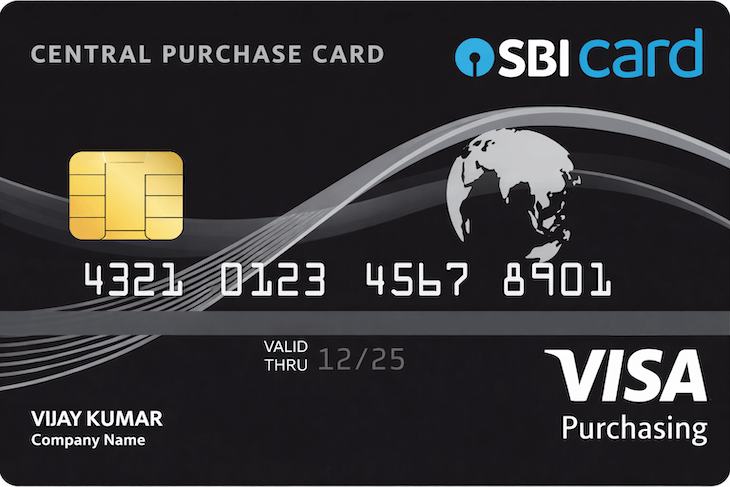
SBI Card Business |
Makes sense for companies that spend big every month | 4.9/5 | Get It! | |
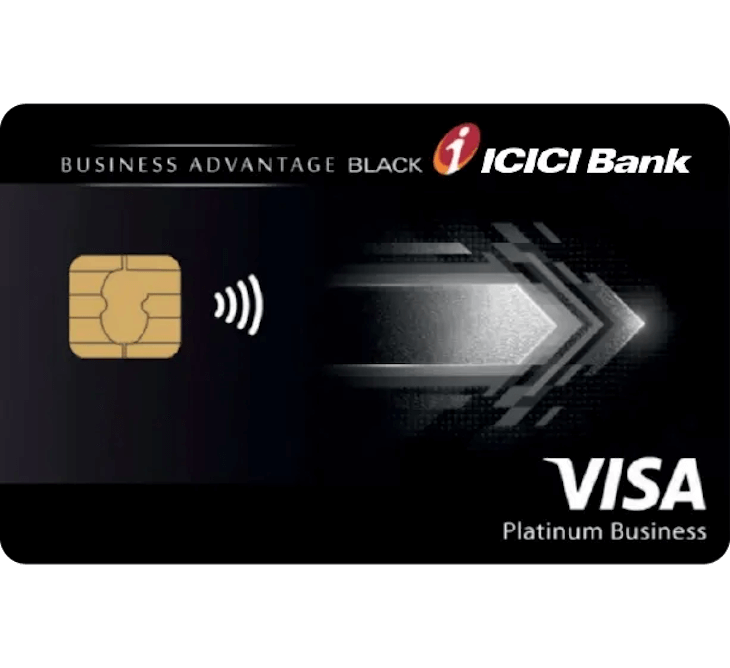
ICICI Bank Business Advantage Black |
Gives you actual cashback instead of complicated points | 4.9/5 | Get It! | |
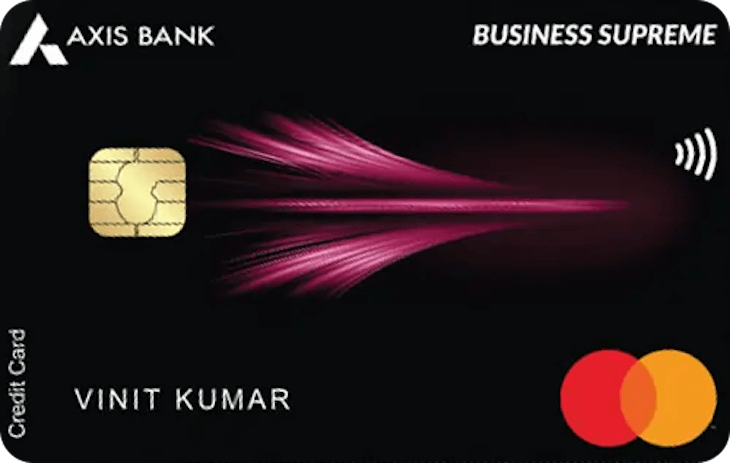
Axis Bank My Business Credit Card |
Works well when you want low annual fees without sacrificing rewards | 4.6/5 | Get It! | |
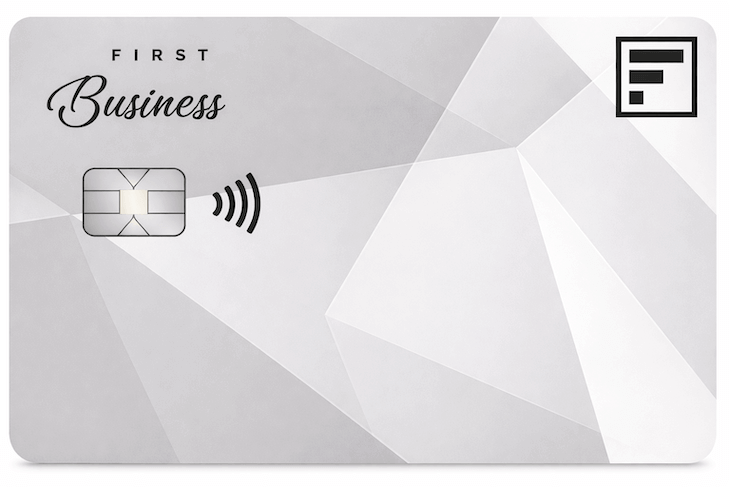
IDFC FIRST Bank Business Credit Card |
Easy approval process for newer companies | 4.6/5 | Get It! | |
HDFC Biz Black Metal Edition Credit Card |
Worth the high fee if your team travels frequently | 4.8/5 | Get It! | |
HDFC Biz Power Credit Card |
Decent middle ground between cost and perks | 4.3/5 | Get It! | |
YES FIRST Business Credit Card |
Their rewards program actually pays off | 4.7/5 | Get It! | |
Kotak Biz Business Credit Card |
Cheap annual fee, basic benefits that work | 4.5/5 | Get It! | |
American Express Platinum Corporate Card |
Expensive but powerful for big corporations | 4.5/5 | Get It! | |

HDFC Biz Grow Credit Card |
Simple starter card for freelancers and small shops | 4.4/5 | Get It! |
Which card works best? It depends on your biggest expenses. Some companies spend heavily on Google Ads and marketing. Others focus on software subscriptions or business travel. Many need fuel cards for vehicle fleets. Employee expense tracking matters too – especially when your team handles multiple business purchases monthly.
This article reviews India’s leading business credit cards available in 2026, comparing fees, rewards, and practical benefits for different business types.
Individual Card Reviews
SBI Card Business Credit Card
Annual Fee: Rs. 4,999 + Applicable Taxes
SBI targets bigger businesses with this one – companies that already spend Rs. 50,000+ monthly across different categories. The bank’s huge merchant network means your card works practically everywhere in India. That matters more than you’d think, especially in smaller towns where other cards get rejected.
Their rewards cover everything from office supplies to client dinners. Not as focused as specialized cards, but useful when your expenses vary month to month. SBI’s business team also responds faster than their regular credit card folks, which helps during urgent situations.
The real advantage kicks in when you already bank with SBI. Your business account history speeds up approvals and often gets you higher credit limits. They also cut some slack on payment terms if you’ve been a good customer for years.
However, that Rs. 5,000 annual fee stings. You need serious spending to justify the cost. Their website looks like it’s stuck in 2015, and reward redemptions involve calling customer service instead of simple online clicks. International fees are expensive too – definitely not ideal if you import products or travel abroad frequently.
Key Features & Benefits:
- Broad reward categories covering most business expenses
- Integration with SBI business banking services
- Wide merchant acceptance across India
- Corporate customer service dedicated to business clients
- Established bank reputation and reliability
- Flexible payment terms for good customers
- Business expense reporting tools
Pros:
- Works everywhere in India, even small towns
- Banking relationship helps with approvals and limits
- Business customer service beats their regular support
- Payment flexibility when you have good history
- Settlement processing stays reliable
Cons:
- High annual fee needs serious spending to justify
- Website and processes feel outdated and clunky
ICICI Bank Business Advantage Black Card
Annual Fee: Rs. 1,500 + Applicable Taxes
ICICI takes a different approach – they give you actual cashback instead of points you need to figure out how to use. Up to 1% back on every transaction sounds simple, and it is. No complicated redemption portals or expiring points to worry about.
This card works well for businesses with steady operational costs. Rent payments, utility bills, supplier invoices – everything earns the same cashback rate. The consistency helps with budgeting since you know exactly what you’ll get back each month.
ICICI’s business banking integration runs pretty smoothly. If you already have a current account with them, the credit card management feels seamless. Their mobile app actually works decently for basic expense tracking, though it’s nothing fancy.
The downside? That 1% cashback rate isn’t spectacular compared to category-specific cards offering 2-3% on targeted spending. Also, ICICI’s customer service quality depends heavily on which call center picks up. Sometimes you get helpful agents, other times you feel like talking to a wall.
Key Features & Benefits:
- Up to 1% cashback on all business transactions
- Simple cashback model without points complexity
- Integration with ICICI business banking services
- Reasonable annual fee for cashback benefits
- Fuel surcharge waiver on petrol/diesel purchases
- Basic business expense tracking tools
Pros:
- Straightforward cashback beats complicated points systems
- Works well for consistent operational spending
- ICICI banking integration feels smooth
- No expiring rewards or redemption headaches
- Fuel benefits help vehicle-heavy businesses
Cons:
- 1% cashback rate isn't amazing compared to category cards
- Customer service quality varies wildly by agent
Axis Bank Business Supreme Master Credit Card
Annual Fee: Rs. 1,000 + Applicable Taxes
Joining Fee: Rs. 1,500 + Applicable Taxes
If your company spends big on advertising, this card makes sense. Google Ads, Facebook campaigns, LinkedIn promotions – they all earn you 6 points per Rs. 200 spent. That’s pretty solid for digital marketing budgets that can hit lakhs every month.
Axis keeps the rewards simple. No confusing categories or rotating bonuses that change quarterly. You spend on ads, you get points. Done. The annual fee won’t break most business budgets either, especially compared to those premium cards that cost Rs. 10,000+ yearly.
But here’s the thing – Axis customer service can really test your patience. Call them during peak hours and you’re looking at 20-30 minute wait times. Their app works okay for checking balances, but don’t expect fancy expense reports or real-time notifications. Some businesses find the settlement delays annoying, especially when they need immediate confirmation for large transactions.
Still, if advertising is your biggest expense and you don’t mind basic service levels, this card delivers decent value. Just don’t expect hand-holding from customer support.
Key Features & Benefits:
- 6 reward points per Rs. 200 on marketing and advertising
- 4 reward points per Rs. 200 on domestic transactions
- 8 reward points per Rs. 200 on international spending
- Quarterly domestic lounge access (4 visits)
- Bonus points at Rs. 5 lakh and Rs. 8 lakh annual spend
- Access to business offers through Mastercard network
Pros:
- Great rewards on advertising spend that actually matter
- Annual fee won't hurt most business budgets
- International spending gets boosted points
- Lounge access helps when traveling for business
- Bonus thresholds most SMEs can actually reach
Cons:
- Customer service wait times drive you crazy
- App feels basic compared to newer options
IDFC FIRST Bank Business Credit Card
Annual Fee: Rs. 999 + Applicable Taxes
IDFC designed this card for newer businesses that established banks often reject. Their approval process focuses less on perfect credit history and more on current business potential. Many startups get approved here after facing rejections elsewhere.
The rewards program covers essential business categories without getting too fancy. Office supplies, software subscriptions, basic travel expenses – you earn points on stuff every business needs. The annual fee stays reasonable for companies watching every expense.
IDFC’s customer service tends to be more helpful than bigger banks, probably because they’re still trying to build their business customer base. Response times are usually better, and agents seem more willing to actually solve problems instead of just following scripts.
However, merchant acceptance can be spotty compared to established players. Some vendors, especially smaller ones, haven’t set up IDFC processing yet. The rewards rate also isn’t spectacular – you’re paying for accessibility, not maximum returns.
Key Features & Benefits:
- Lower approval barriers for newer businesses
- Reasonable annual fee structure
- Basic rewards on common business categories
- Better customer service response times
- Digital-first approach to account management
- Simplified application and approval process
Pros:
- Easier approval for startups and new businesses
- Customer service actually tries to help
- Low annual fee fits startup budgets
- Digital processes work smoothly
- Less bureaucratic than traditional banks
Cons:
- Merchant acceptance isn't universal yet
- Reward rates stay pretty basic across categories
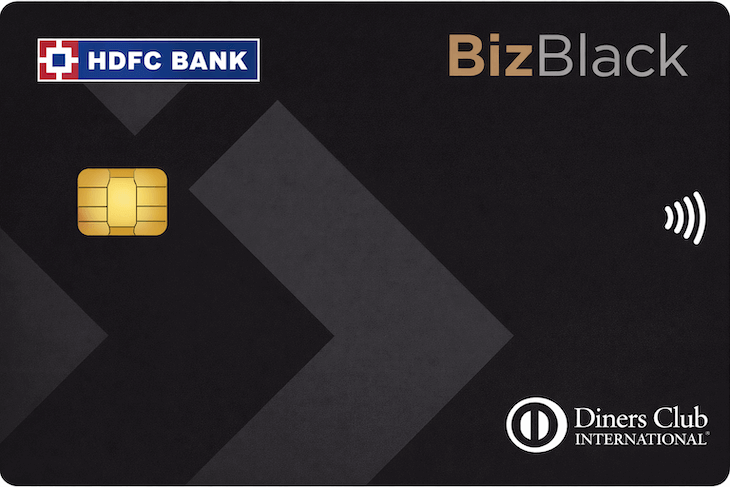
HDFC Biz Black Metal Edition Credit Card
Annual Fee: Rs. 10,000 + Applicable Taxes
This is HDFC’s premium business card, and that Rs. 10,000 fee tells you everything about their target market. Companies with serious travel budgets and high monthly expenses. If your team flies regularly or you entertain clients frequently, the benefits can justify the cost.
The metal card itself feels substantial, which matters for client-facing situations. Lounge access is unlimited, both domestic and international. Travel insurance coverage is comprehensive, including trip cancellation and lost baggage. The concierge service actually works when you need restaurant reservations or emergency travel changes.
Business-specific perks include detailed expense reporting, employee card management, and integration with accounting software. The rewards rate on travel and dining expenses beats most other cards in India.
But that annual fee is brutal if you don’t use the premium features regularly. The card also comes with typical HDFC customer service issues – long wait times, inconsistent information, and agents who don’t understand business needs. International acceptance is excellent, but domestic merchant coverage has gaps in smaller cities.
Key Features & Benefits:
- 5X reward points on select business spending categories
- Unlimited domestic and international lounge access
- Comprehensive travel and business insurance coverage
- Premium concierge services for business needs
- Metal card with enhanced status recognition
- Advanced expense management and reporting tools
Pros:
- Premium travel benefits justify cost for frequent flyers
- Metal card impresses in client situations
- Excellent international acceptance and services
- Comprehensive insurance coverage for business travel
- Advanced reporting helps with expense management
Cons:
- Rs. 10,000 annual fee needs serious usage to justify
- HDFC customer service quality remains inconsistent
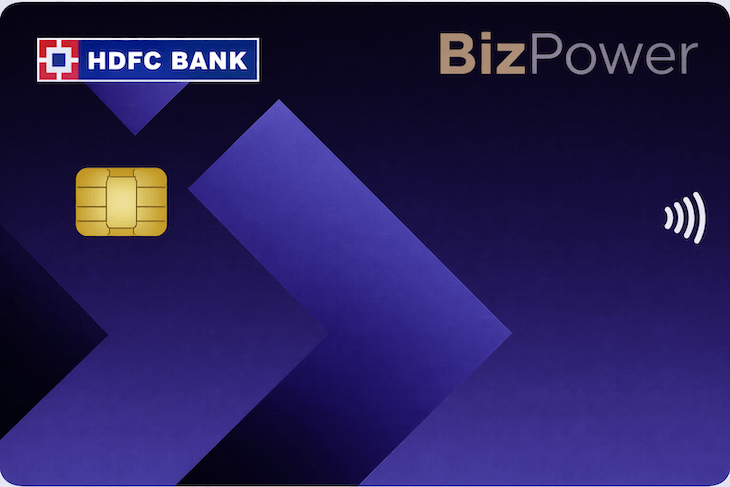
HDFC Biz Power Credit Card
Annual Fee: Rs. 2,500 + Applicable Taxes
This sits between HDFC’s basic and premium business cards. You get many of the same features as the Black Metal edition but at a quarter of the cost. Makes sense for mid-sized businesses that want decent perks without the premium price tag.
The rewards structure mirrors their premium card – 5X points on business spending like advertising, travel, and software purchases. You also get limited lounge access (16 domestic visits yearly) which covers most business travelers who aren’t constantly flying.
HDFC’s business tools work reasonably well here. Expense categorization, employee spending limits, and basic reporting help with month-end reconciliation. The integration with their SmartBuy platform offers decent discounts on business software and travel bookings.
The catch? You’re still dealing with HDFC’s customer service, which can be frustrating during urgent situations. The card also has the same merchant acceptance gaps in smaller towns. International transaction fees are reasonable but not the best in the market.
Key Features & Benefits:
- 5 reward points per Rs. 150 on business essentials and 3 reward points per Rs. 150 on other eligible spends.
- 16 complimentary domestic lounge visits annually
- Business expense tracking and reporting tools
- SmartBuy platform discounts on software and travel
- Employee card management with spending controls
- Travel insurance coverage for business trips
Pros:
- Good balance between benefits and annual fee cost
- Decent lounge access for regular business travelers
- HDFC's business tools help with expense management
- SmartBuy discounts save money on recurring purchases
- Employee cards help manage team spending
Cons:
- Still stuck with HDFC's inconsistent customer service
- Merchant acceptance issues in smaller cities persist
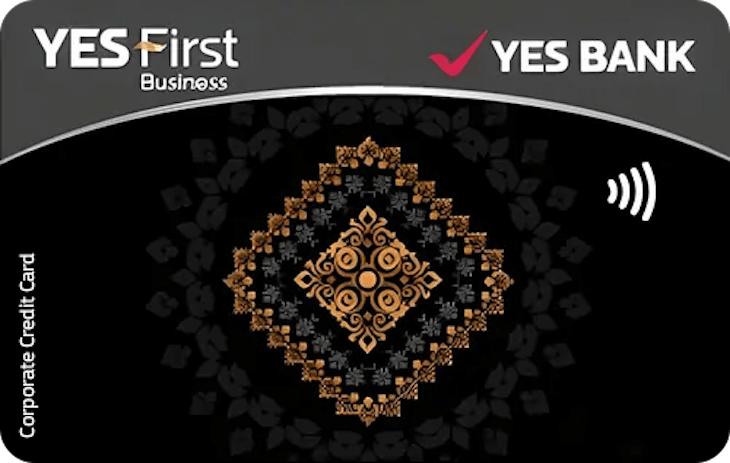
YES FIRST Business Credit Card
Annual Fee: Rs. 999 + Applicable Taxes
YES Bank positions this as their flagship business offering, and honestly, it delivers decent value for the price. The rewards program is aggressive – up to 16 points per Rs. 200 on select categories. That’s competitive with much more expensive cards.
Travel benefits include international lounge access through Priority Pass, which is rare at this price point. The forex markup of 1.75% also beats most competitors, making it useful for businesses that import products or pay international vendors.
YES Bank’s customer service tends to be more responsive than larger banks, mainly because they’re still building market share. Their mobile app works well for basic expense tracking, and the approval process is usually faster than established players.
However, YES Bank’s financial stability concerns make some businesses nervous. The rewards redemption portal can be confusing, and some users report technical glitches. Merchant acceptance is decent in major cities but drops off in smaller towns.
Key Features & Benefits:
- Up to 16 reward points per Rs. 200 on select spending
- International lounge access via Priority Pass membership
- Low forex markup rate of 1.75% on international transactions
- Golf benefits and exclusive business offers
- Faster approval process than major banks
- Reasonable annual fee for benefits offered
Pros:
- Excellent rewards rate compared to annual fee cost
- International benefits rare at this price point
- YES Bank customer service responds faster than big banks
- Low forex charges help import-heavy businesses
- Golf perks add value for client entertainment
Cons:
- Bank stability concerns worry some business owners
- Rewards portal interface feels clunky and confusing
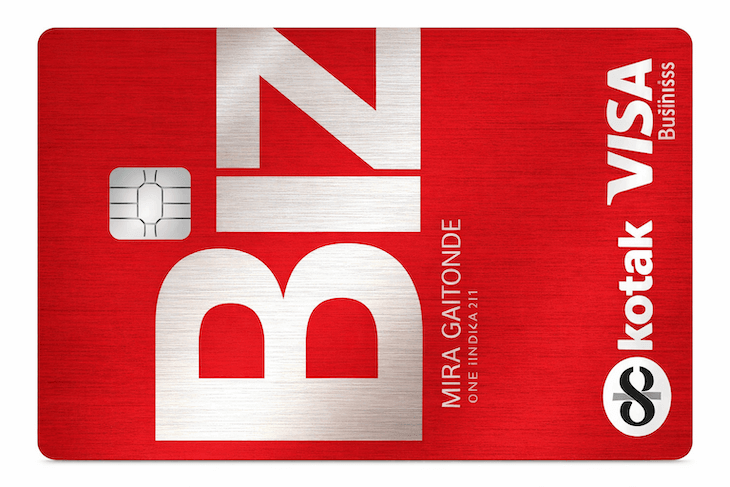
Kotak Biz Business Credit Card
Annual Fee: Rs. 499 + Applicable Taxes
At Rs. 499, this is probably the cheapest business credit card from a major bank. Kotak targets small businesses and freelancers who want basic business credit functionality without paying premium prices.
The rewards are nothing spectacular – 4X points on travel and advertising, 1X on everything else. But for a Rs. 499 card, that’s fair. You also get quarterly lounge access and fuel surcharge waivers, which cover basic business needs.
Kotak’s approval process is straightforward, especially if you already have a business account with them. The card works fine for separating business and personal expenses, which is often the main goal for smaller companies.
The limitations are obvious at this price point. Customer service is basic, the rewards portal is simple but functional, and premium features are nonexistent. Merchant acceptance matches other Kotak products – good in major cities, spotty elsewhere.
Key Features & Benefits:
- 4 reward points per Rs. 100 on travel and advertising
- 1 reward point per Rs. 100 on other purchases
- Quarterly domestic lounge access (1 visit)
- Fuel surcharge waiver up to certain limits
- Basic expense tracking and categorization
- Low annual fee suitable for small businesses
Pros:
- Lowest annual fee among major bank business cards
- Basic rewards program works for small spending volumes
- Simple approval process for existing customers
- Covers essential business credit needs affordably
- Fuel benefits help with vehicle expenses
Cons:
- Rewards rates are basic compared to premium alternatives
- Customer service and features match the low price point
American Express Platinum Corporate Card (India)
Annual Fee: Rs. 40,000 + Applicable Taxes
This card targets large corporations with substantial travel and entertainment budgets. At Rs. 50,000 annually, it’s clearly not for small businesses or startups. But for companies that can justify the cost, the benefits are comprehensive.
The concierge service actually works well for business needs – restaurant reservations, travel changes, event planning. Travel benefits include airport transfers, hotel upgrades, and comprehensive insurance. The card also provides detailed spending analytics that help with budgeting and expense control.
Amex’s corporate customer service is generally better than their consumer division. Response times are faster, and agents understand business urgency better. The reporting tools integrate with most accounting systems, which saves time during month-end closing.
The major limitation is acceptance. Many Indian merchants don’t accept Amex, forcing you to carry backup cards. The annual fee also requires serious spending to break even. This card only makes sense for large companies with dedicated travel budgets and frequent international business.
Key Features & Benefits:
- Premium concierge services for business needs
- Comprehensive travel benefits and insurance coverage
- Advanced spending analytics and reporting tools
- Airport transfers and hotel upgrade programs
- Dedicated corporate customer service support
- Integration with major accounting software platforms
Pros:
- Concierge service handles complex business travel needs
- Corporate customer service understands business urgency
- Advanced reporting saves time on expense reconciliation
- Premium travel benefits justify cost for heavy users
- Accounting software integration streamlines bookkeeping
Cons:
- Rs. 50,000 annual fee limits this to large corporations only
- Merchant acceptance issues force you to carry backup cards
HDFC Biz Grow Credit Card

Annual Fee: Rs. 500 + Applicable Taxes
HDFC’s entry-level business card targets startups and small businesses just getting started with business credit. The zero annual fee removes the barrier for companies testing business credit cards for the first time.
Basic rewards cover common business expenses – 2 points per Rs. 150 on most transactions. Nothing exciting, but reasonable for a free card. You also get limited business tools like expense categorization and basic reporting.
The approval process is simpler than HDFC’s premium cards, though still requires standard business documentation. Customer service quality matches other HDFC products – inconsistent but acceptable for a free offering.
This card works as a stepping stone. Use it to build business credit history, then upgrade to better options as your company grows. The lack of annual fee makes it risk-free to try.
Key Features & Benefits:
- Zero annual fee for basic business credit access
- 2 reward points per Rs. 150 on business transactions
- Basic expense tracking and categorization tools
- Simple approval process for new businesses
- Path to upgrade to premium HDFC business cards
- Standard business credit reporting to build history
Pros:
- Basic rewards better than no rewards at all
- No annual fee makes it risk-free to try
- Helps build business credit history with major bank
- Simple approval process for qualifying businesses
- Easy upgrade path to premium cards later
Cons:
- Minimal benefits reflect the zero-fee structure
- Customer service quality typical of HDFC standard
How We Chose the Best Business Credit Cards

Picking the right business credit card isn’t about flashy marketing or impressive welcome bonuses. This guide focuses on what actually matters when you’re running a company in India and need a card that works.
Here’s what we looked at:
- Does the annual fee make sense? – A Rs. 10,000 card better deliver serious value, while Rs. 499 options just need to cover basics without disappointing you
- Rewards on stuff you actually buy – Cards that give points on Google Ads, fuel, software subscriptions, and business travel beat those focused on shopping and dining
- Can you actually use the rewards? – Statement credits and direct cash work better than confusing point systems where you can’t figure out redemption values
- Managing your team’s spending – Employee cards with proper controls, spending limits, and expense tracking that doesn’t require a finance degree
- No nasty surprises in fees – Cards with straightforward pricing beat those with hidden charges that show up months later on your statement
- Works where you shop – Great rewards mean nothing if half your vendors don’t accept the card network, especially in smaller cities
- Customer service that gets business urgency – When your company card gets blocked during a client dinner, you need fast resolution, not 45-minute hold times
We tested these cards against different business scenarios – startup founders, established SMEs, and larger companies with travel budgets. The “best” card depends entirely on where your money goes each month and what headaches you want to avoid.
How to Compare Business Credit Cards in India
Choosing the right business credit card requires understanding what actually affects your bottom line, not just comparing flashy marketing materials. Here’s how smart business owners evaluate their options.
Annual Fee and Waiver Conditions
Don’t just look at the headline annual fee – dig into waiver conditions. Many cards waive fees if you spend Rs. 1-2 lakhs annually, which most businesses easily hit. However, some banks change waiver thresholds without notice, so factor the full fee into your calculations. Premium cards charging Rs. 5,000+ better deliver proportional value through rewards, insurance, or services you’ll actually use.
Rewards Structure Analysis
Base reward rates matter less than category bonuses on your biggest expenses. A card giving 1% on everything beats 5% on categories you never use. Look for caps on bonus categories – some cards limit advertising rewards to Rs. 25,000 monthly, which active digital marketers quickly exhaust. Also check if bonus rates apply to tax payments, as many businesses use cards for GST and income tax obligations.
Redemption Practicality
Point systems sound impressive until you try redeeming them. Statement credits offer the most flexibility – they reduce your actual bill rather than forcing specific purchases. Gift vouchers work if they’re from vendors you regularly use, but avoid programs pushing luxury items your business doesn’t need. Cash conversion rates vary wildly, with some cards offering terrible value that makes their “high” point earning meaningless.
Business Controls and Employee Management
Employee cards need proper spending controls, not just additional plastic. Look for real-time limit adjustments, category restrictions, and transaction alerts. Some cards let you block specific merchant types (like bars for field staff) or set time-based restrictions. Monthly/weekly spending reports should integrate with your accounting software rather than requiring manual data entry every month.
Hidden Costs That Matter
Beyond annual fees, factor in interest rates if you’ll carry balances occasionally. Late payment penalties vary dramatically between issuers – some charge flat fees while others use percentage-based calculations that hurt larger balances. Foreign transaction fees matter for import businesses or international travel. Cash advance fees and over-limit charges can surprise businesses during cash flow crunches.
Merchant Acceptance Reality
Premium networks like American Express offer excellent benefits but work at fewer Indian merchants. Visa and Mastercard have broader acceptance, though some smaller vendors still prefer cash to avoid processing fees. Test acceptance at your regular suppliers, fuel pumps, and business service providers before committing to any card. Rural and semi-urban acceptance lags significantly behind metropolitan areas.
Practical Example
If your biggest monthly expense is Rs. 50,000 on Google Ads, prioritize cards offering 4-6X points on advertising over those with general 2X rates. The Axis Business Supreme’s 6X advertising bonus generates significantly more value than ICICI’s flat 1% cashback, despite ICICI’s simpler redemption process. Match the card’s strengths to your spending reality, not theoretical scenarios.
Types of Business Credit Cards
Business credit cards come in different flavors, and picking the wrong type wastes money or leaves you without features you actually need.
Small Business Cards
Perfect for solo entrepreneurs, consultants, and tiny companies. You’re probably handling everything yourself, so these cards keep things simple. Annual fees usually stay below Rs. 2,000, and banks mainly care about your personal credit score since there’s no separate business history yet.
The rewards focus on basic stuff – fuel, office supplies, maybe some travel. Nothing fancy like employee spending controls because, well, it’s just you. Cards like HDFC Biz Grow and Kotak Biz Business work well here. They separate your business expenses from personal ones without drowning you in features you don’t need.
Corporate Cards
Built for real companies with actual employees who need to spend company money. Now you need proper controls – who can spend what, where, and how much. These cards cost more (Rs. 2,500 to Rs. 10,000+ annually) but give you employee management tools that actually work.
You get detailed reports, spending limits per person, and integration with accounting software so your bookkeeper doesn’t hate you. HDFC Biz Power and SBI Business Cards handle this well, giving you visibility into team spending without micromanaging every transaction.
Premium Business Cards
For companies where image matters and travel budgets run deep. Annual fees hit Rs. 10,000+ easily, but you get unlimited lounge access, concierge services, and travel insurance that covers your team properly.
These cards make sense when client entertainment and frequent business travel justify the premium pricing. HDFC Biz Black Metal and Amex Platinum Corporate serve this crowd – companies where the card itself signals success to clients and partners.
Secured Business Options
When banks won’t approve you normally, these cards let you put down a deposit (Rs. 50,000-2,00,000) as security. Your credit limit matches about 80-90% of whatever you deposit. It’s not ideal, but it builds business credit history when you’re starting from zero.
Comparison Table of All Credit Cards
| Credit Card | Annual Fee | Rewards Focus | Employee Management | Best For |
|---|---|---|---|---|
| Axis Bank Business Supreme | Rs. 1,500 + taxes | 6X on advertising, 4X domestic | Basic controls | Marketing-heavy businesses |
| SBI Card Business | Rs. 4,999 + taxes | Broad business categories | Standard employee cards | Established companies with diverse spending |
| ICICI Business Advantage Black | Rs. 1,500 + taxes | 1% cashback on all spends | Limited employee features | Operational cost management |
| IDFC FIRST Business | Rs. 999 + taxes | General business rewards | Basic add-on cards | Startups and new businesses |
| HDFC Biz Black Metal | Rs. 10,000 + taxes | 5X on travel and dining | Advanced expense tracking | Premium travel and entertainment |
| HDFC Biz Power | Rs. 2,500 + taxes | 4X on select business spends | Moderate employee controls | Mid-sized business operations |
| YES FIRST Business | Rs. 999 + taxes | Up to 16X on categories | Standard employee management | Growing businesses seeking high rewards |
| Kotak Biz Business | Rs. 499 + taxes | 4X on travel and advertising | Basic employee cards | Small businesses and freelancers |
| Amex Platinum Corporate | Rs. 50,000 + taxes | Premium travel rewards | Comprehensive corporate tools | Large enterprises with travel budgets |
| HDFC Biz Grow | Nil + taxes | 2X on business transactions | Minimal features | Entry-level business credit building |
This comparison helps identify which cards match your company’s spending patterns, employee management needs, and budget constraints. Focus on cards where the annual fee makes sense relative to your expected rewards and usage patterns.
Major Problems with Corporate Credit Cards in India
Business credit cards sound great in theory, but real-world usage reveals frustrating limitations that many companies only discover after getting stuck with them.
Limited Acceptance Creates Daily Friction
Your corporate card works at maybe 7.8 million terminals nationwide. Sounds like a lot until you realize your team needs to pay street vendors for lunch, auto drivers for client meetings, and small suppliers who hate the 2% processing fees banks charge them.
These vendors simply refuse cards or quote higher cash prices to cover the merchant fees. Result? Your employees end up using personal money anyway, which defeats the whole point of corporate cards for expense tracking.
Activation Takes Forever When You Need Speed
New employee joins your team? They’ll wait 2-3 weeks for their corporate card to arrive by courier. Then comes PIN generation, activation calls, and figuring out spending limits. Virtual cards aren’t much better – still need 3-5 days minimum.
Meanwhile, that new hire needs to travel for client meetings or handle urgent supplier payments. They’re stuck using personal funds while your “efficient” corporate card system catches up.
Controls That Don’t Actually Control Anything
Want to freeze one employee’s card instantly because of suspicious charges? Good luck. Those limits are baked into the plastic, and changing them means filling out bank forms and waiting for approval.
Transaction data shows up 24-48 hours later in messy CSV files. No receipts attached, no real-time alerts, no ability to stop problems when they happen. You’re always reacting to issues instead of preventing them.
Month-End Becomes a Nightmare
Employees swipe cards. Then they’re supposed to upload receipts separately. Half the time, those receipts go missing or get uploaded to the wrong transactions. Your finance team spends weeks playing detective, matching payments to invoices and chasing people for missing paperwork.
Integration with accounting software? Exists in theory, but usually requires manual data entry anyway because the categories don’t match or the timing is off.
Hidden Costs Pop Up Everywhere
That Rs. 2,500 annual fee is just the start. Interest rates hit 20-40% if you carry balances. Late fees, forex charges, over-limit penalties – they add up fast. Some banks even charge for duplicate statements or card replacements.
Plus, RBI now requires written policies about personal vs. business usage, creating more paperwork for your HR team to handle.
Pros and Cons of Business Credit Cards
Business credit cards solve some problems while creating others. Here’s what actually matters in day-to-day usage.
Pros
- Clean expense separation – Your business and personal spending stay completely apart, making tax time way easier
- Ready cash when you need it – Credit line covers unexpected expenses without emptying your business account
- Earn while you spend – Rack up points on advertising, travel, and other stuff you're buying anyway
- Let employees spend without cash – Give team members cards with limits instead of advancing personal money
- Build business credit history – Separate from your personal credit, helps with future business loans
- Bookkeeping gets easier – Transactions auto-sort into categories that work with accounting software
- Travel perks that matter – Lounge access and insurance help when your team flies for business
- Protection when things go wrong – Dispute resolution helps recover money from bad vendors
Cons
- Too many vendors won't take cards – Street food, auto rides, small suppliers often demand cash only
- Getting new cards takes forever – 2+ weeks for physical cards kills your speed when hiring
- Controls don't work in real time – Can't freeze problem cards instantly when fraud happens
- Month-end reconciliation is painful – Matching receipts to charges becomes a full-time job
- Fees pile up fast – Annual charges, interest, late fees add up beyond the advertised costs
The benefits work well for established businesses with predictable spending patterns, but smaller companies often find the limitations outweigh the advantages.
How to Get a Business Credit Card in India
Applying for a business credit card means dealing with more paperwork than personal cards, but it’s not rocket science once you know what banks actually want.
Figure Out Your Spending First
Don’t pick a card before understanding where your money goes. Spending Rs. 30,000 monthly on Facebook ads? Look for cards with advertising bonuses. Travel Rs. 1 lakh quarterly for client meetings? Focus on travel rewards. This homework saves you from choosing cards that don’t match your actual expenses.
Pick the Right Card Level
Freelancers don’t need the same features as companies with 15 employees. Simple business cards work fine when it’s just you handling everything. But if your team needs spending controls and expense tracking, you’ll want corporate-level features. Don’t overpay for stuff you won’t use.
Meet the Basic Requirements
Banks typically want businesses operating for 2+ years, though some approve newer companies if your personal credit looks solid. Self-employed folks need ITR filings showing decent income. Companies need proper financial records. Income requirements range from Rs. 2-10 lakhs annually depending on the card.
Get Your Documents Ready
Personal stuff: PAN, Aadhaar, address proof like utility bills or rental agreements.
Money proof: ITR filings from last 2-3 years, business bank statements, salary slips if you’re employed, audited financials for bigger companies.
Business proof: GST certificate, company registration papers, partnership agreements, shop licenses, business PAN, current account statements.
Apply and Wait for Verification
Online applications work for straightforward cases. Complex situations need branch visits. Banks will call to verify income, visit your business location, and check references. Approval decisions take 1-2 weeks typically.
Set Everything Up After Approval
Configure spending limits for employee cards, connect mobile banking, link your accounting software if possible, and create expense policies. Skipping this setup creates headaches later when you’re trying to track spending.
Are Business Credit Cards Worth It?
Whether business credit cards deliver value depends on your spending habits and tolerance for administrative hassles.
When They Actually Help Your Business
If your company regularly spends Rs. 25,000+ monthly at places that accept cards, you’ll probably come out ahead. Software subscriptions, Google Ads, business flights, hotel bookings – these expenses naturally work with card payments and often trigger bonus reward categories.
Companies with employees who need to spend money benefit from centralized tracking instead of cash advances or reimbursement headaches. The expense separation alone saves hours during tax preparation when you’re not sorting through mixed personal-business transactions.
Service companies that entertain clients find the travel perks genuinely useful. Airport lounge access and travel insurance actually get used, making annual fees feel worthwhile.
When They Create More Problems Than Solutions
Cash-heavy businesses struggle with limited card acceptance. If your suppliers prefer bank transfers, your team buys from street vendors regularly, or you operate in industries where cards aren’t welcome, the benefits disappear quickly.
Small operations with unpredictable cash flow risk carrying balances that generate interest charges exceeding any reward earnings. The monthly reconciliation burden also outweighs benefits when the business owner personally handles all spending anyway.
Reality Check
Cards work best for established businesses spending Rs. 2-3 lakhs annually in card-friendly categories. Below that spending level, or in predominantly cash industries, you’re better off with simpler payment methods that don’t require managing another monthly bill.
FAQ
1.
Which are the best business credit cards in India?
The answer really depends on what your company actually spends money on. If you’re pumping Rs. 50,000 monthly into Google Ads and Facebook campaigns, grab the Axis Bank Business Supreme – it gives you 6X points on advertising. Got mixed expenses across different categories? ICICI Business Advantage Black just gives you 1% cashback on everything, no headaches.
Travel a lot for client meetings? HDFC Biz Black Metal makes sense despite the hefty annual fee. Just starting out? HDFC Biz Grow costs nothing yearly and helps build business credit history.
2.
What’s the difference between a business credit card and a corporate credit card?
Business cards target smaller companies – think freelancers, consultants, shops with 2-5 employees. Banks mainly look at the owner’s personal credit score and keep things simple. Corporate cards serve bigger companies with proper HR departments, multiple locations, serious employee management needs.
Corporate versions give you fancy reporting tools, tighter spending controls, and integration with accounting software that actually works. They also cost more because you’re paying for all those extra features.
3.
Can I get a business credit card in my own name (sole proprietor/freelancer)?
Absolutely. Plenty of consultants, designers, and small shop owners get business cards under their personal name with business designation. Banks want to see your business income through ITR filings and bank statements showing client payments.
You might start with lower credit limits, but regular usage and payments bump those up pretty quickly. Just make sure your business income documentation looks clean and consistent.
4.
Do business credit cards check personal credit and affect my credit score?
Yeah, they definitely check your personal credit since you’re personally backing the debt. Most business card activity shows up on your personal credit report too – good payments help your score, missed payments hurt it.
Some big corporate cards only report to commercial bureaus, but don’t count on that unless the bank specifically confirms it during approval.
5.
What credit score is needed for a business credit card in India?
Most cards want 750+ for easy approval. Premium cards often demand 800+. But don’t panic if your score sits between 650-750 – some banks still approve you, especially with strong business income proof or existing accounts with them.
Worst case, secured business cards let you deposit money as collateral while building up your credit history.
6.
Is GST registration mandatory for a business credit card in India?
Not always, though banks prefer seeing GST numbers since it proves you’re running a real business. If you’re below the Rs. 20 lakh GST threshold, other documents work fine – professional licenses, partnership papers, proprietorship registration.
7.
Are business credit cards worth it for small businesses?
They make sense if you spend Rs. 2-3 lakhs yearly in places that actually accept cards. The expense separation alone saves headaches during tax season. But if your suppliers prefer cash or bank transfers, you’re probably better off skipping the monthly reconciliation hassle.