
Inside Rolls-Royce’s Biggest-Ever Summer Programme in Saint-Tropez

The content of this material is informational and educational in nature and cannot be regarded as financial advice. It is extremely important to conduct an independent analysis before any financial transactions. If you are not sure about financial matters, it is strongly recommended to seek the advice of an independent expert.
A Summer Programme Built Around Presence
Rolls-Royce returned to Saint-Tropez in July 2026 with something considerably larger than a conventional seasonal appearance. The company assembled 16 Bespoke motor cars across four locations around Saint-Tropez and Ramatuelle for what it described as its most extensive summer programme to date. Running until 31 July, the programme had the scale and duration of a sustained presence rather than a brief launch event or one-off display.
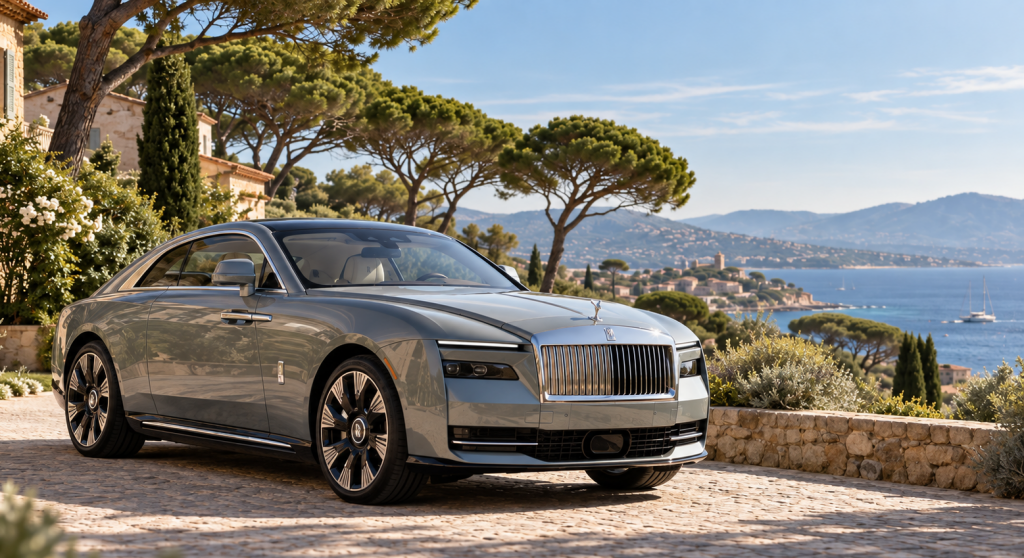
The cars were distributed between La Réserve Ramatuelle, Airelles Château de la Messardière, Airelles Pan Deï Palais and Nikki Beach. Those venues were not merely interchangeable backgrounds for photographs. Together they allowed Rolls-Royce to appear across several parts of the hospitality landscape that shape a summer stay in and around Saint-Tropez, rather than concentrating every interaction in a single automotive setting.
The numbers are striking, but they are not the most revealing part of the story. Sixteen Bespoke cars could have been assembled in one carefully controlled location and still produced an impressive display. Instead, Rolls-Royce spread the programme across places with different functions and gave the cars an active role within them. That decision changes the character of the event.
A conventional showroom is organized around the product. The customer goes to the car, enters an environment created specifically for sales and specification, and spends time with the brand on terms largely defined by the retail space. In Saint-Tropez, much of that arrangement was reversed. The cars entered an existing pattern of hotels, hospitality, road travel and social activity.
That matters because the setting in which a luxury car is encountered influences what can be understood about it. Materials, paintwork and detailing can be examined almost anywhere. The relationship between the car and its surroundings is harder to communicate when the vehicle is stationary. Once a car is being driven, used for a transfer or encountered more than once over the course of a stay, it begins to occupy a different place in the client’s experience.
Rolls-Royce has made clear that its seasonal activities are intended to place the marque in destinations already frequented by parts of its client community. The significant point is not that an ultra-luxury manufacturer has chosen an affluent resort. Luxury brands have long followed customers to seasonal destinations. What stands out in 2026 is the depth of the automotive presence once Rolls-Royce arrives.
With enough cars, staff and locations, the company can move beyond visibility. Saint-Tropez becomes a setting in which the product can be seen, driven and discussed under different circumstances. A hotel arrival creates one kind of encounter; time behind the wheel creates another. A conversation with a specialist adds a third layer that is difficult to reproduce through display alone.
There is also an important difference between placing cars in a desirable location and allowing them to function within that location. The 2026 programme was built around the latter. The vehicles were part of driving experiences, transfers and hospitality rather than objects separated from the rest of the event.
That makes Saint-Tropez useful as a case study in a wider development in ultra-luxury automotive retail. The car remains the central object, but the relationship around it is no longer confined to a dealership visit. For Rolls-Royce in the summer of 2026, the destination became part of the framework through which clients encountered the marque. Understanding how that framework worked requires looking beyond the headline figure of sixteen cars and into the programme itself.
A Programme Designed to Move
The practical structure explains why Rolls-Royce needed more than one venue. Driving opportunities, chauffeur-driven transfers, private hospitality and access to members of the Rolls-Royce Bespoke Collective were woven through the programme, allowing clients to experience the cars in different ways rather than through a single scheduled presentation.
Self-driven experiences were one part of that arrangement. Selected participants could spend time behind the wheel, with the Rolls-Royce motor-car portfolio available for selected driving experiences. Chauffeur-driven transfers offered the opposite perspective: the car as transport experienced from the passenger compartment rather than primarily through its controls.
Those two formats communicate different things. Driving puts dimensions, steering, acceleration and road behaviour into context. Travelling as a passenger shifts attention toward the cabin, ride and the way the vehicle functions when someone else is at the wheel. Neither requires an elaborate explanation. The fact that both were available within the same programme gave clients more than one way to understand the product.
This is where the distribution across several locations becomes important. A static automotive display compresses the encounter into one place and one frame of reference. Once cars circulate between hotels and hospitality venues, the boundaries are less rigid. The product becomes part of movement through the destination rather than the sole destination itself.
The hospitality programme extended that logic. Rolls-Royce included private dinners, pétanque evenings, receptions and other curated gatherings. These activities were not remarkable simply because they were private or carefully arranged; such formats are common across the luxury sector. Their relevance here comes from the way they allowed automotive interaction to continue outside the moment of a formal drive.
Members of the Bespoke Collective were also present, giving clients opportunities to speak with specialists involved in the company’s approach to individual specification. That is particularly significant for Rolls-Royce because Bespoke work is central to how many of its cars are conceived. Questions about colour, materials, finishes and personal details do not have to begin across a dealership desk. In Saint-Tropez, those conversations could sit alongside the driving and hospitality elements rather than being isolated from them.
Black Badge Spectre Series II gave the programme a current product focus. Rolls-Royce describes it as the most powerful Rolls-Royce yet created, but its presence did not turn the event into a single-model launch. It appeared within a broader selection of cars and experiences, allowing the programme to represent the marque more widely while still giving a recent model particular relevance.
Outside the official programme, private automotive access is already part of the transport environment around Saint-Tropez. Chauffeured vehicles, privately owned cars and services such as car rental in Saint-Tropez all exist within the wider pattern of summer movement between hotels, restaurants, beaches, residences and surrounding towns. That context is separate from Rolls-Royce’s own programme, but it helps explain why cars can be integrated into daily activity here without appearing artificially inserted.
The distinction between ordinary transport and a manufacturer-controlled experience is important. Rolls-Royce could decide which vehicles were involved in its programme, how clients encountered them and which specialists were available around them. The surrounding road environment, by contrast, consists of many unrelated forms of ownership and access. The two overlap geographically without being connected commercially.
What the multi-venue format adds is repetition without requiring the same experience to be repeated. A client might encounter the marque as a passenger, later drive a different car and then speak with a Bespoke specialist. Each interaction adds information without having to reconstruct the entire brand story from the beginning.
That cumulative effect is difficult to produce during a conventional appointment. A showroom visit may be highly detailed, but it remains bounded by a place and a purpose. Saint-Tropez allowed Rolls-Royce to spread the interaction across a longer period and embed it in activities clients were already undertaking.
The scale of the programme therefore matters because of what it enabled. Sixteen cars gave Rolls-Royce enough depth to build several kinds of encounter into the same destination. The question raised by that investment is no longer simply how the programme operated, but why the company increasingly sees this kind of seasonal, place-specific engagement as worth building.
Beyond the Dealership Visit
Saint-Tropez becomes easier to understand when placed within a broader seasonal pattern. Rolls-Royce has also referenced Courchevel 1850 during the winter season and, later in summer 2026, its Spirit of Marassi programme on Egypt’s North Coast. The destinations differ in climate, geography and character, yet each provides an opportunity for the company to create encounters with its cars in places already visited by parts of its client community.
This does not make the dealership irrelevant. Permanent retail spaces still offer advantages a seasonal programme cannot easily reproduce: continuity, controlled presentation, specialist staff and an environment designed specifically around purchasing and commissioning a car. Destination programmes do something different. They place the vehicle closer to the circumstances in which it might actually be used.
That difference is particularly visible with a marque whose cars can be experienced from more than one perspective. A Rolls-Royce may be driven by its owner, used with a chauffeur, specified in great personal detail or encountered over a series of journeys rather than during a single test drive. A seasonal programme can separate these experiences and allow each to develop in its own context.
A conventional dealership drive normally begins and ends at the retail location. However carefully the route is chosen, the journey retains the structure of a demonstration. In a destination such as Saint-Tropez, the roads and arrival points are already part of the client’s stay. Driving therefore takes place within a setting that resembles actual use more closely, even if it remains a managed experience.
The same is true of passenger travel. A chauffeur-driven transfer between venues is not merely another chance to sit inside the car. It shifts attention from the driver’s relationship with the machine to the way the cabin works as a place to travel. That distinction matters for a brand whose customers may use their cars in both ways.
The implications should not be overstated. Participation in a destination programme tells us nothing by itself about subsequent purchasing decisions, and Rolls-Royce has not provided evidence that the Saint-Tropez format produces a particular sales result. Nor does the existence of these events mean every client prefers them to a showroom visit. The more defensible conclusion is that the company is investing in additional ways for people to spend meaningful time with its cars beyond the boundaries of conventional retail.
Seasonal programming also gives Rolls-Royce flexibility that permanent premises cannot. Courchevel in winter and Saint-Tropez in summer place the cars in markedly different environments. Marassi extends the idea to another coastal setting later in the season. The point is not to accumulate destinations for their own sake, but to use temporary programmes where the surrounding context makes the product easier to experience naturally.
Time is part of that difference. A dealership appointment is deliberate and usually concentrated. The customer has chosen to visit for an automotive reason. A destination programme can unfold more gradually. An initial encounter may take the form of a transfer or informal introduction, while driving and discussions about specification happen later.
For an ultra-luxury manufacturer, that longer sequence has practical value because the product itself is only one part of what must be communicated. Bespoke commissioning, materials, personalisation and the difference between driving and being driven each demand a different kind of attention. A single appointment can cover all of them, but a multi-day programme gives each more room.
This is better understood as an extension of the retail relationship than as a replacement for it. Rolls-Royce can maintain permanent dealerships while adding temporary points of contact shaped around particular places and seasons. Saint-Tropez in 2026 represents the company’s most extensive summer version of that approach to date.
There is, however, a limit to explaining the Riviera entirely through contemporary client strategy. Rolls-Royce’s connection with this coast reaches much further back than seasonal hospitality and destination-based brand programmes. Long before Saint-Tropez became part of the modern calendar, Sir Henry Royce had established a working connection with the French Riviera.
A Riviera Connection Older Than the Programme
The modern programme acquires another layer when placed beside Rolls-Royce’s earlier history in southern France. Sir Henry Royce spent many winters at Le Canadel on the French Riviera, where he continued engineering work. Designers and engineers also worked at Le Rossignol, making the region part of the company’s working history rather than simply a place associated with leisure.
That distinction matters because heritage can easily become decorative in luxury marketing. A historic name or archival photograph can be attached to a contemporary event without affecting its substance. The Royce connection is more specific. His time on the Riviera coincided with continuing technical work, connecting the area to the engineering culture from which the company developed.
There is no need to turn that fact into a romantic scene. The documented details are strong enough on their own. Royce spent many winters at Le Canadel. Engineering work continued there. Designers and engineers were associated with Le Rossignol. Nothing is gained by inventing conversations, journeys or personal impressions that the record does not establish.
It would be equally misleading to present the Saint-Tropez programme of 2026 as a direct continuation of that earlier activity. The purposes were clearly different. Royce’s Riviera connection belonged to an engineering context; the modern programme is built around cars, clients, hospitality and Bespoke interaction. A century of changes in the company and the region separates the two.
What the historical link does provide is depth. Rolls-Royce did not need to manufacture an association with the Riviera from nothing in order to justify its modern presence there. The coastline already had a documented place in the company’s past, even if the nature of that relationship has changed.
That makes the contemporary programme more interesting than a generic luxury activation placed wherever an affluent seasonal audience happens to gather. A manufacturer can select a resort because customers are present there, and many brands do. Rolls-Royce can make the same commercial calculation in Saint-Tropez while also pointing to a relationship with the region that predates modern event strategy.
The most useful contrast is therefore not a simple “then versus now.” Earlier Rolls-Royce activity on the Riviera was not a primitive version of today’s client programme, and today’s programme is not a revival of Henry Royce’s engineering work. They belong to different periods and different purposes. Their relevance comes from sharing a geography that has remained significant to the company in more than one way.
That shared geography also changes how the Riviera functions within the wider story. It would be reductive to describe the region only as a concentration of wealthy summer visitors. In Rolls-Royce history, the coast also appears as a place where engineering activity continued away from the company’s principal British base. The modern programme adds a new layer rather than replacing the old one.
Keeping the historical account precise helps avoid confusing heritage with nostalgia. Nostalgia tends to dissolve detail into atmosphere; documented history does the opposite. Le Canadel and Le Rossignol matter because specific work was associated with them, not because they can be turned into an imagined backdrop for the founder.
The present-day Riviera is, of course, radically different from the one Royce knew. Tourism, urban development, hospitality and patterns of wealth have changed the way the coast functions. The automotive environment has expanded with them. High-end cars now move through a dense network of cities, resorts, hotels, residences, business events and seasonal gatherings.
Rolls-Royce therefore occupies only one part of a much larger contemporary car culture. The marque may create a controlled experience in Saint-Tropez, but its cars also appear on the same roads as privately owned vehicles, chauffeured fleets and other luxury models with no connection to the official programme.
That broader environment stretches beyond Saint-Tropez. Nice and Cannes occupy different positions along the same coast, and the role of the car changes with them. Looking at those distinctions helps explain why the Riviera as a whole provides such fertile ground for an automotive programme built around movement rather than display.
Three Riviera Settings, Three Different Roles
The French Riviera is often compressed into a single image, but Saint-Tropez, Nice and Cannes do not function in the same way. They are connected by geography and overlapping flows of visitors, yet each produces a different relationship between cars, hospitality and movement.
Saint-Tropez is the most visibly seasonal of the three. Summer life is heavily shaped by private hospitality, hotels, beach clubs, restaurants, residences and movement between destinations that are spread across the surrounding area. The car matters because many journeys are not simple trips between two urban addresses. They form part of the daily logistics of moving between places that define a stay.
That helps explain why the Rolls-Royce programme could operate across several venues without appearing detached from its surroundings. High-end cars are already familiar within the local road environment, whether privately owned, chauffeur-driven or temporarily accessed. Car rental in Saint-Tropez is one element of that broader pattern, but it sits alongside several other forms of mobility rather than defining the automotive culture by itself.
Nice plays another role. It is a larger city and a major arrival and movement point for the Riviera. People pass through it on their way east or west along the coast, while many others remain in the city for business, leisure or longer stays. Its transport connections, residential areas, hotels and road network give the car a more infrastructural function than it has in the concentrated seasonal environment around Saint-Tropez.
Within that setting, car hire in Nice forms part of the broader range of temporary private mobility used by visitors who want independent road access. The significance here is geographical rather than promotional: Nice’s position means cars often serve as a link between the city and other parts of the Riviera rather than as part of a self-contained resort experience.
Cannes adds a third pattern. Leisure remains important, but the city’s international profile is also tied to conferences, festivals, business gatherings, major hotels and other events that produce periods of intense, highly visible movement. Premium vehicles often appear around arrival points, hotel entrances and central routes when professional and social activity overlap.
The luxury car can therefore occupy a more public role in Cannes than it does in some parts of the Saint-Tropez programme. An arrival outside a hotel or event venue is visible to a wider audience. During major gatherings, the sheer concentration of high-end vehicles makes them part of the streetscape even when no automotive brand is formally involved.
This is where the boundary between manufacturer-controlled experience and ordinary road presence becomes especially useful. Most expensive cars seen in Cannes are not part of promotional programmes. They may be privately owned, chauffeured or rented, and their appearance says nothing about an official relationship with the manufacturer.
Rolls-Royce road cars belong to that civilian environment too. A privately used Phantom or Cullinan seen outside a hotel operates in a completely different context from one of the cars deployed within the structured Saint-Tropez programme. The manufacturer does not control the surrounding experience, the journey or the people with whom the vehicle is associated.
Services such as Rolls-Royce rental in Cannes fall into this separate category of civilian access to Rolls-Royce road cars. They are not extensions of Rolls-Royce Motor Cars’ Saint-Tropez programme, and the existence of rental access does not imply any partnership, endorsement or connection to the sixteen official programme vehicles. The distinction is important precisely because the marque is visible on the Riviera both inside and outside situations created by the manufacturer itself.
Nice, Cannes and Saint-Tropez therefore show three different reasons for the density of premium cars along this coast. Around Saint-Tropez, private leisure and hospitality generate frequent movement between dispersed destinations. Nice combines local traffic with a strong role in arrival and onward travel. Cannes periodically concentrates event traffic and highly visible hotel movements.
None of those functions belongs exclusively to luxury vehicles. What they provide is an environment in which expensive cars are regularly used rather than reserved for isolated occasions. That normality is significant. Rolls-Royce did not bring its programme into a region where high-end motoring needed to be introduced or explained.
Instead, the company inserted a carefully managed experience into an already crowded automotive landscape. In practical terms, that raises the standard for differentiation. Simply parking an expensive car in front of an expensive hotel would add little to a setting where such combinations are common.
The Saint-Tropez programme attempted something more structured. Driving, transfers, Bespoke interaction and hospitality distinguished the official experience from the background flow of privately owned and commercially accessed luxury cars across the coast. The manufacturer was not trying merely to be visible; it was trying to control the circumstances under which clients engaged with the marque.
That distinction becomes clearer when the three locations are considered together. The Riviera offers many ways for an expensive vehicle to be seen, but fewer opportunities for a manufacturer to shape a sequence of experiences around it. Saint-Tropez gave Rolls-Royce enough concentration of hospitality, road use and client activity to build that sequence without creating an artificial automotive setting from scratch.
The region’s existing car culture therefore does not diminish the significance of the 2026 programme. It helps explain it. Rolls-Royce chose to make its largest summer effort to date in a place where high-end cars were already part of daily seasonal movement, then tried to distinguish its own presence through depth rather than simple spectacle.
When Context Becomes Part of the Car
By July 2026, the Saint-Tropez programme had grown into something that could not be explained simply by the number of cars involved. Sixteen Bespoke motor cars across several locations gave Rolls-Royce enough scale to shape a series of different encounters with the marque: driving, travelling as a passenger, speaking with Bespoke specialists and taking part in private hospitality.
Those activities point toward a broader change in how an ultra-luxury automotive brand can present itself. A showroom remains a highly controlled environment, but control does not have to mean keeping the car stationary. Saint-Tropez allowed Rolls-Royce to maintain a managed experience while placing the product on actual roads and inside a functioning hospitality network.
The physical setting therefore became part of the communication. Roads mattered because clients could drive. Hotels mattered because they functioned as real arrival and departure points. Transfers mattered because they placed passengers in the car for a practical journey rather than a demonstration designed solely around the vehicle. Bespoke specialists mattered because conversations about individual specification could happen while the product was already being experienced.
None of those elements is revolutionary on its own. Automotive companies have organized test drives for decades, luxury brands have long used hospitality, and Rolls-Royce’s Bespoke work is well established. What is notable in Saint-Tropez is the degree to which those elements were assembled around a destination and allowed to operate together for an extended period.
The Riviera is unusually accommodating to that model because the necessary conditions already overlap there. High-end cars are common on the roads. Hotels and private hospitality create repeated arrival points. Clients may move between several locations in a single day. Chauffeur-driven and self-driven transport coexist. A programme can therefore make use of an existing pattern of behaviour rather than inventing one for the duration of an event.
That reduces the gap between presentation and use. A car seen under exhibition lighting can be examined closely, but much of its purpose remains theoretical. A car encountered on the road, used for a transfer or driven between real destinations is being evaluated within a more complete context. The surroundings do some of the explanatory work.
The Bespoke component adds another layer. Rolls-Royce does not sell individuality only through mechanical specification. Paint, materials, detailing and personal commissions play a major role in the relationship between the company and many clients. Bringing specialists into the same programme as driving and hospitality means those discussions can happen around lived experience of the cars rather than as a separate stage detached from them.
The wider Riviera automotive environment makes this approach more, not less, necessary. Rolls-Royce cars already appear on the coast outside official events, alongside other high-end marques and through many unrelated forms of private or commercial access. In such a setting, visibility alone has limited value. A manufacturer-controlled programme has to create a recognisable difference in how the car is encountered.
History gives the choice of region another layer without needing to be turned into a marketing myth. Sir Henry Royce spent many winters at Le Canadel and continued engineering work on the Riviera, with designers and engineers associated with Le Rossignol. That earlier connection does not explain the structure of the 2026 programme, and it should not be presented as though Rolls-Royce has followed a single Riviera strategy for a century.
It does mean, however, that the company’s presence on this coast did not begin with contemporary experiential marketing. The modern programme occupies a geography that already appears in Rolls-Royce history for a very different reason. That makes the relationship more complicated, and more interesting, than one invented solely around the seasonal habits of current customers.
The Saint-Tropez programme sits at the intersection of those histories and present-day conditions. It uses a region associated with the company’s past, but its format is unmistakably contemporary. It takes advantage of a dense modern luxury-car environment while trying to distinguish the official experience from the ordinary presence of expensive vehicles on Riviera roads.
Its scale is therefore best understood not as a display of abundance but as infrastructure for context. Rolls-Royce needed enough cars, venues, specialists and hospitality to make the experience work across several parts of a client’s stay. The sixteen cars mattered because they allowed the marque to appear in different roles without collapsing everything into a single presentation.
That is the clearest analytical point to emerge from Saint-Tropez in 2026: Rolls-Royce did not simply transport a showroom to the Riviera. It built a programme large enough for the Riviera itself to perform part of the showroom’s traditional work.