
What the 2026 Cannes Yachting Festival Revealed About the Future of the Yacht Market
A Market Assembled in Two Harbours
Between 8 and 13 September 2026, the Cannes Yachting Festival filled the Vieux Port and Port Canto with more than 700 boats and yachts. Official material counts around 680 exhibitors and roughly 56,600 visitors across the week. For an event now in its 49th edition, totals of that size invite an easy conclusion: a crowded quayside must mean a healthy industry. The figures cannot carry that much weight.
Attendance and boat counts describe an event, not a market. Nothing in them reveals how many vessels changed hands, at what value, or how many of those 56,600 visitors were buyers rather than suppliers, brokers, enthusiasts or passers-by. Those are the numbers that would speak to growth, and this article does not have them. It would be wrong to invent a substitute.
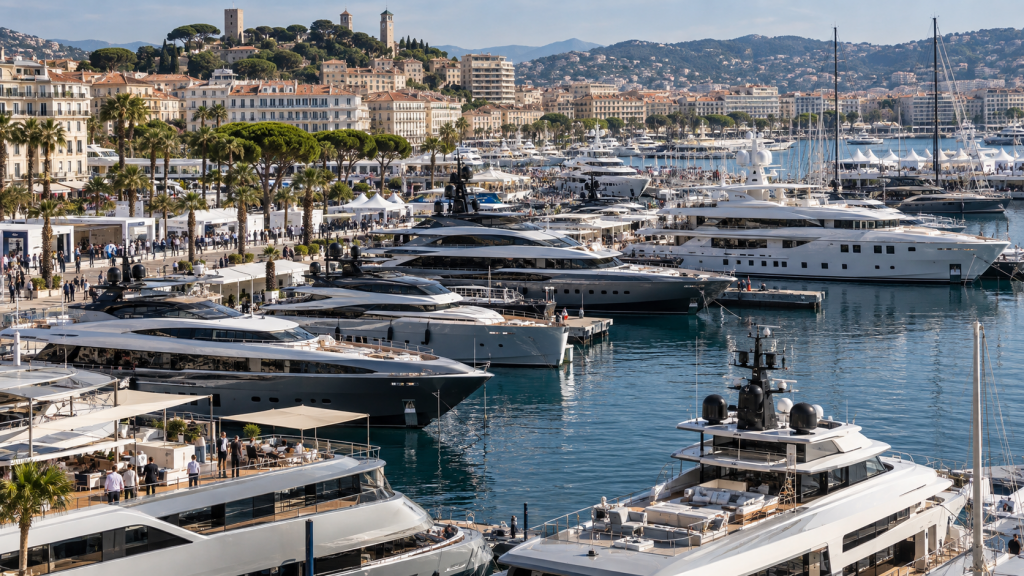
What the totals do capture is concentration. The yacht business is a set of loosely connected trades: yards that build series-production boats and yards that build to a single owner’s specification, designers, engine and battery suppliers, electronics makers, brokers handling second-hand tonnage, managers who run vessels on an owner’s behalf, charter operators. Most of the year these work in different cities and sell to different customers. For six days each September, Cannes puts a working sample of nearly all of them within a short walk of one another, and that proximity is the real reason to study the show.
It is, in that sense, a snapshot of priorities. What a builder chooses to unveil, which technologies an equipment maker puts on its stand, how much water a brokerage occupies: each is a commercial decision taken months in advance, with money attached. Set side by side across hundreds of exhibitors, those decisions indicate where the industry believes attention is worth spending. That is a narrower claim than saying where buyers are heading, but a more defensible one.
The limitation belongs at the start rather than the end. Cannes is a commercially organised exhibition. Exhibitors pay to take part, and the organisers shape the layout, the programme and the awards. Builders who favour other events, or who sell mostly without trade shows, are underrepresented by design. So are regions whose yards and clients rarely make the trip to the Côte d’Azur in early autumn. The festival is a selected sample, defined by who chooses to exhibit, and it cannot stand in for every buyer or builder worldwide.
A snapshot with a known frame is still useful, provided the frame is stated. Comparisons within the show are safer than conclusions drawn from it. How much space a category receives, how many premieres it attracts, whether a technology sits in a demonstration area or on a production boat: these are observations that can be set against independent industry data where it exists. Statements about the whole market need a different kind of evidence, and they will be marked as such in what follows.
The clearest evidence of range at Cannes is physical. Walk from the Vieux Port to Port Canto and the boats change in scale, propulsion and purpose: powerboats and equipment stands on one side, a dedicated in-water sailing area and rows of pre-owned yachts on the other. That spread, more than any headline total, is where the show begins to say something.
A Trade Divided Along the Waterfront
The layout of the festival is a useful guide to how the boating trade organises itself. Vieux Port carries the heaviest concentration of motor yachts and power boats, alongside day boats, RIBs, power catamarans and the equipment and technology suppliers that serve them. Port Canto holds the Sailing Area, brokerage and pre-owned yachts, smaller power boats and several specialist sectors. The division is one of emphasis rather than a wall. Power boats appear at Port Canto, technology reaches sailing boats, and the same visitor can walk both quays in an afternoon.
The emphasis still matters, because each concentration corresponds to a different customer and a different sales conversation. Someone weighing a day boat for weekends on the water is solving a different problem from an owner comparing sailing boats of ten metres and more for extended cruising, and different again from a buyer who wants a second-hand motor yacht with a known survey history. The site reads as arranged by use as much as by size.
The Sailing Area is the clearest case. The figures here come from the festival’s official pre-show material, and this article has not seen a final post-event count. That material stated that around 120 monohulls and multihulls would be shown afloat in 2026, all of them sailing boats above roughly ten metres, and the organisers describe it as the world’s largest in-water exhibition of large new sailing boats. That is the festival’s own claim and is best read as such. The same material said nearly one in five boats in the Sailing Area would be world premieres. The proportion applies to that area only. It says nothing about the festival as a whole, where motor yachts and power boats fill much of Vieux Port and follow their own launch calendars.
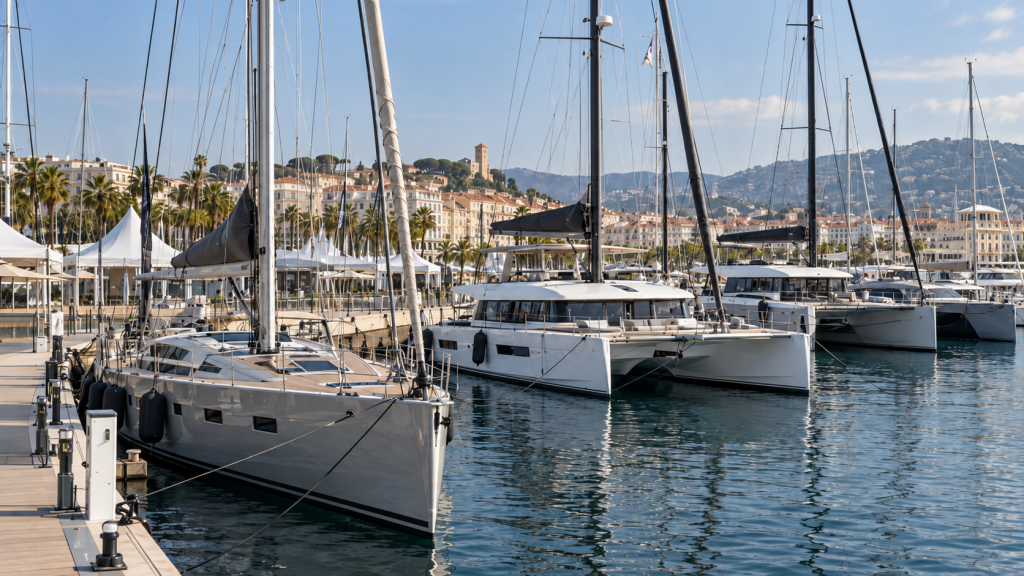
What a dedicated area of this size indicates is sustained investment. Builders rarely bring unreleased models to a showcase unless they expect buyers among the audience, and a sailing section with a substantial share of new designs suggests that yards still see reason to develop the category. It does not indicate that sailing is gaining on motor yachts globally. The show offers no comparison of sales between the two, and a large area reflects how the organisers chose to divide the site as much as it reflects demand.
Multihulls complicate any tidy division, which is part of their interest. Sailing catamarans share the water at Port Canto with monohulls, while power catamarans sit among the motor boats at Vieux Port. The hull form crosses the boundary between sail and power, and its presence in both harbours points to wider product choice: buyers who want deck space, shallow draught or stability at anchor have options in both camps. Whether they are choosing those options in growing numbers is a separate question, and a trade show cannot answer it. Multihull visibility does not show that owners are leaving monohulls. Independent registration or order data would be needed for that.
Variety of this kind changes what a market analysis can sensibly claim. With so many distinct products and buyers under one festival banner, generalising about “the yacht market” hides more than it shows. The more revealing question is which of these segments is receiving new engineering, and much of the answer sits in the technologies and designs exhibitors chose to present as their next steps.
Many Engineers, No Single Answer
The Innovation Route gives the festival a formal way of asking exhibitors what they consider new. The 2026 awards were organised around several categories: equipment that improves navigation, sustainable products, innovative vessels, and CSR initiatives. The spread is informative in itself. Industry attention is divided between safety and seamanship, energy and materials, hull and layout concepts, and the conduct of the companies involved. No single theme framed the programme.
Electrification and emissions reduction sit inside that wider picture, alongside propulsion development, marine technology and new patterns of use. They are best read as areas of active experimentation and investment. They are not evidence of a completed transition. The Innovation Route showcases what exhibitors chose to put forward, and an award shortlist is not a sales ranking. Nothing presented in Cannes suggests that conventional engines have been displaced as the working propulsion of most boats. An item in an innovation showcase may be a prototype, a limited series, or an option on a model that most buyers will order without it.
Fragmentation follows from the problem itself, because different boats have different energy problems. A day boat used for short outings and charged at a berth overnight faces one set of constraints. A motor yacht making long passages faces another, dominated by range, weight and the practicalities of refuelling far from a marina. A sailing yacht already draws power from the wind, and its questions concern auxiliary propulsion, onboard systems and the efficiency of its hull and rig. It would be surprising if these boats converged on one technical answer, and engineers appear to be working several routes at once: battery-electric drive where duty cycles allow, hybrid arrangements where they do not, efficiency gains from hull design, and different energy sources for larger vessels.
World premieres add another layer of evidence and another reason for caution. Cannes is a place where builders unveil models, and a new model can signal several different things: a fresh design direction, a change of propulsion, a rearranged interior, new materials, or an attempt to reach a customer group the yard has identified. Some premieres are refinements of established platforms, while others open new lines. Either way, a premiere records what a builder has decided to offer. It is not a verdict from buyers. Demand shows up later, in order books that a trade show does not publish. The same applies to the share of new boats in the Sailing Area: it points to yards willing to spend on development, and says little about how many of those boats will sell.
What emerges is a picture assembled from parts rather than delivered whole. Builders are weighing efficiency against performance, interior volume against draught, and propulsion against how the boat will actually be used. Nothing in the show indicates that buyers choose on a single criterion. Environmental credentials sit alongside range, comfort, running costs and resale considerations, and their weight will differ from one owner to the next.
All of this concerns boats that do not yet exist. A large part of any yacht market, however, is made up of vessels that have already been built and are still looking for their next owner or user.
Where Built Yachts Change Hands
Port Canto gives a substantial part of its space to brokerage and pre-owned yachts, and the placement matters. Cannes sets existing inventory beside new production within the same festival. A visitor moves from a builder’s stand, where a model is being introduced, to a broker’s berth, where a yacht with a service history and a previous owner is offered as it stands. The show cannot say whether pre-owned business is growing or shrinking, and without reliable market data that question should be left alone. The point is structural: the trade treats built yachts as a market in their own right.
Treating them as one would blur several different decisions. Commissioning a yacht means working with a yard and often a designer over an extended build, with the owner shaping the specification. Buying a new series-production boat is closer to selecting from a range and choosing options. Buying a pre-owned yacht brings surveys, documented history and the changes earlier owners made, but the boat exists and can be inspected. Each route carries its own timeline, its own risks and its own kind of adviser.
Brokerage is the connecting function. Brokers represent buyers and sellers, advise on valuation, negotiate and handle the paperwork, and their presence at Cannes reflects how much of the trade depends on intermediaries. Management is a different activity again. Someone has to crew, maintain, insure, berth and keep a yacht compliant, and owners who are rarely aboard often hand that work to a professional manager. Refit and maintenance belong to the same logic, which is one reason equipment and service suppliers occupy so much of the show. A yacht generates work for years after the sale.
Charter sits in a separate layer. For many people, ownership is not the aim at all. A Cannes yacht charter involves no transfer of title, no maintenance burden and no commitment beyond the trip itself, which puts it in a different category from either building or buying. It belongs to the civilian charter market that operates around the festival. The yachts within it should not be assumed to be the boats shown at the event, and the festival’s organisers have no connection with the businesses that offer them.
Taken together, these functions describe an ecosystem in which the sale of a new boat is one event among many. The same vessel may be built for one owner, resold through a broker, run by a management company and used by a series of temporary guests. Each of those roles has to be performed somewhere, and that is where the festival’s setting starts to matter, because the boats bought, sold, managed and chartered still need berths, crews and routes along the Riviera coast.
The Coast Beyond the Quayside
Once the stands are dismantled and the pontoons emptied, the boats that make up this market do not disappear. Many of them were never at the show. At any point in the season, the water around Cannes holds several groups of vessels that share space but not commercial logic. Manufacturers’ new models are the shortest-lived presence, on view for days. Brokers represent pre-owned yachts whose owners have decided to sell, and those boats may lie at a Riviera berth or in a yard in another country. Privately owned yachts, used by their owners and families, form a third group that appears in no listing. Commercially chartered yachts, placed with operators for paying guests, form a fourth. And larger crewed yachts move up and down the Mediterranean with the season, following weather, events and demand.
These groups overlap geographically without overlapping commercially. A single harbour can hold a builder’s demonstration boat, a brokered motor yacht awaiting survey, an owner’s yacht used only in August, and a crewed vessel between charters. Each has a different person responsible for it, a different revenue model and a different reason for being there. Treating them as interchangeable produces the loose talk about “the yacht market” that this article has tried to avoid.
That is the case for Cannes as a meeting point. Manufacturers, brokers, service companies, owners, prospective buyers and charter businesses can work in the same regional environment while performing different functions, and proximity lowers the cost of contact between them. A broker can meet a yard’s sales team, a maintenance supplier can find a management company, and an owner considering a sale can compare notes with people who handle such sales daily. None of this requires a given visitor to be buying. Many attendees come to sell, service, advise or learn, and footfall should not be read as a queue of purchasers. Nor do all owners charter their yachts. Many never do, using their boats privately as a personal asset rather than an operating one.
The larger crewed end of the Mediterranean shows the distinctions most clearly. A yacht with a professional captain and crew is a complex operation as much as a vessel, carrying salaries, insurance, provisioning, fuel, berthing and maintenance costs whether or not anyone is aboard. Some owners offset part of that by placing the yacht in the civilian market, and the resulting segment of luxury yacht charter in Cannes draws on its own network of charter brokers, managers and crews, which works largely apart from the trade-show calendar. Boats in that segment should not be presumed to have been shown at the festival, and neither the festival nor its exhibitor lists have any bearing on them. The overlap is one of place and season, not of stock or organisation.
Regional movement adds another layer. Yachts travel along the coast toward Monaco, Antibes and Saint-Tropez, and onward to Italian and Spanish ports, as the summer calendar dictates, so a vessel seen in Cannes in September may be elsewhere within weeks. Cannes is one node in that circulation, valued for its infrastructure, its access and its concentration of specialist trades, and it is not a fixed home for any one kind of yacht.
The show gathers the makers and intermediaries, while the coastline holds the users. Any claim about the future has to account for both, and for how much a single week in September can be expected to reveal about the rest.
Reading a Show Without Overreading It
Some conclusions from Cannes are firm enough to state. The show presents a diverse product mix, with motor yachts, sailing boats, day boats and multihulls each holding dedicated space and continuing development. Both the sailing and motor sectors are receiving new-product investment, visible in premieres on both quays. Multihulls are an established part of the mix, in sail and in power. Electrification and emissions reduction are active areas of engineering, with several technical routes explored at once. New construction sits beside a substantial brokerage and pre-owned segment, and temporary access through charter remains a distinct activity from ownership. Cannes also continues to gather many industry functions in one place. Each of these describes what the exhibition displayed, and each rests on its layout and programme.
Other statements would outrun the evidence. The festival cannot show which vessel type will dominate global sales, since it publishes no sales comparisons and its allocation of space reflects organisers’ choices as well as demand. It cannot show that electric propulsion will become universal, because an innovation programme records what exhibitors put forward, not what buyers accept at scale. The visibility of multihulls says nothing about whether buyers prefer them, or whether any owners are leaving monohulls. It cannot show charter replacing ownership, since the two appear here as separate functions and nothing at the show measures movement between them. And no single design trend can be said to define what comes next when the show’s most consistent feature is that builders are pursuing different answers.
Tests of those larger claims sit elsewhere: in builders’ results, registration data, broker transaction records and industry surveys. A trade show can suggest where to look, and it cannot supply the numbers.
What the festival offers, then, is a well-organised comparison. Anyone arriving with a single theory of yachting’s direction would find the same quays holding the case for efficiency and for size, for sail and for power, for new construction and for a second owner. Cannes is useful less as a forecast than as a place where several competing versions of yachting’s future sit side by side, close enough to compare and not yet sorted into winners.
Where to Rent a Sports Car in Nice: 5 Services to Compare
29.10.2026

5 Premium Car Rental Services in Courchevel for Winter 2026–2027
29.10.2026
Why the Balearics Function as a Meeting Point for Modern Yachting
09.10.2026
What MIMO 2026’s 30,000 Visitors Say About Italy’s Supercar Culture
07.10.2026
How the 2026 Maxi Yacht Rolex Cup Reinforced Porto Cervo’s Role in Mediterranean Yachting
09.10.2026
How the 2026 Palma International Boat Show Kicked Off the Mediterranean Yachting Season
07.10.2026
Marbella’s 2026 Classic-Car Weekend Put the Costa del Sol’s Car Culture in the Spotlight
07.10.2026
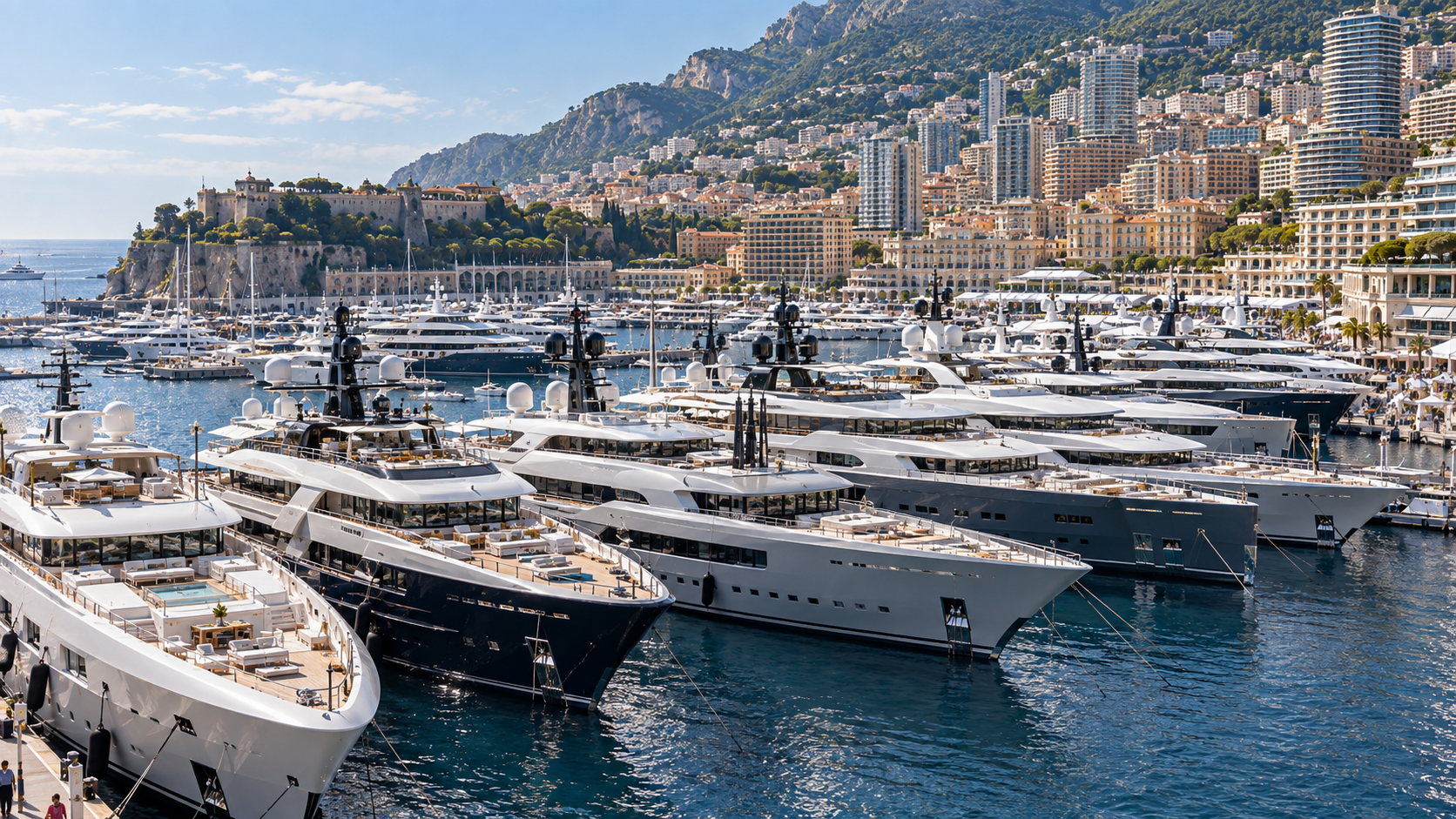
What 120 Superyachts in Monaco Reveal About the State of Luxury Yachting in 2026
09.10.2026
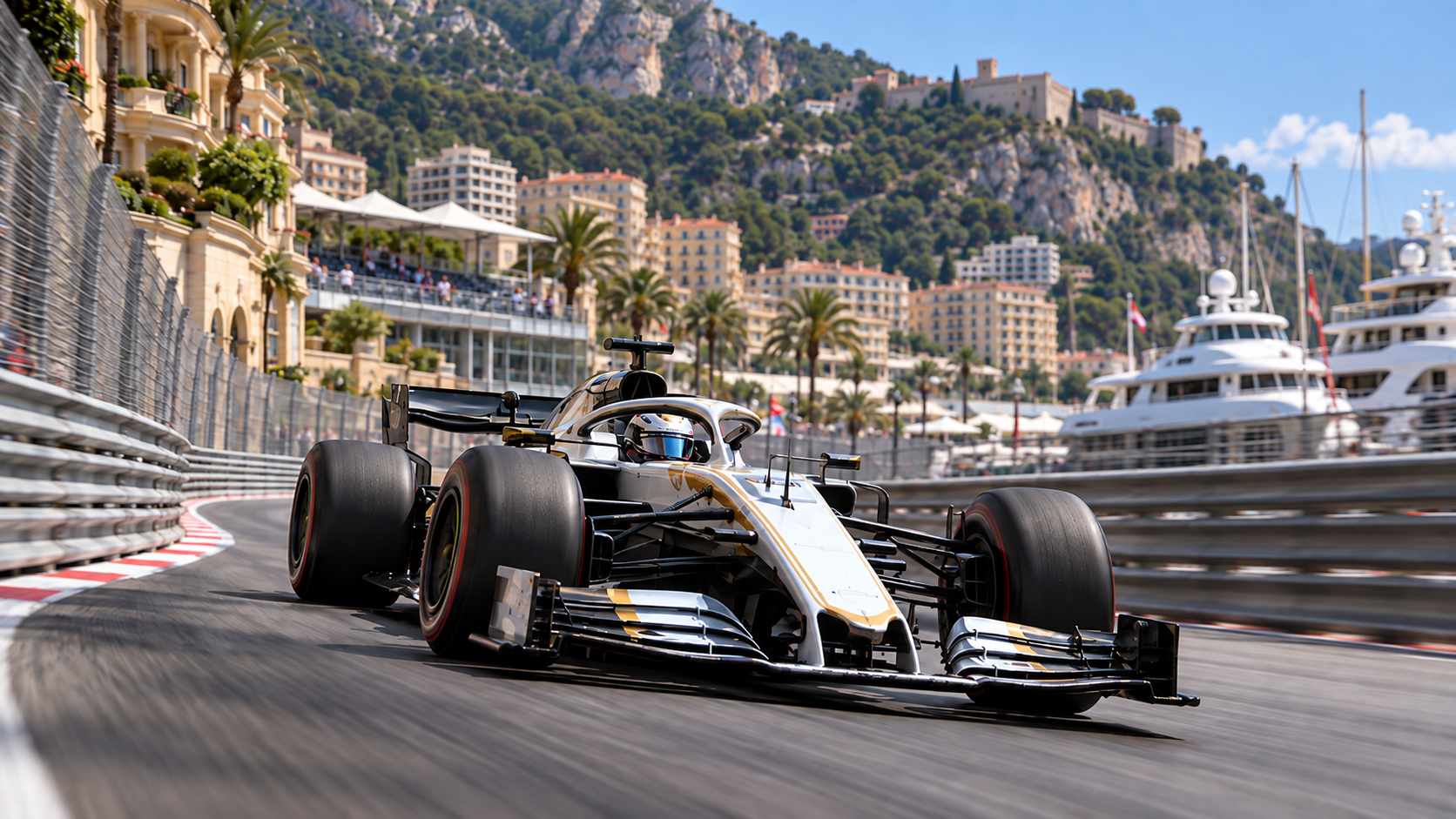
From the Grand Prix to the Yacht Show: Inside Monaco’s 2026 Luxury Season
07.10.2026
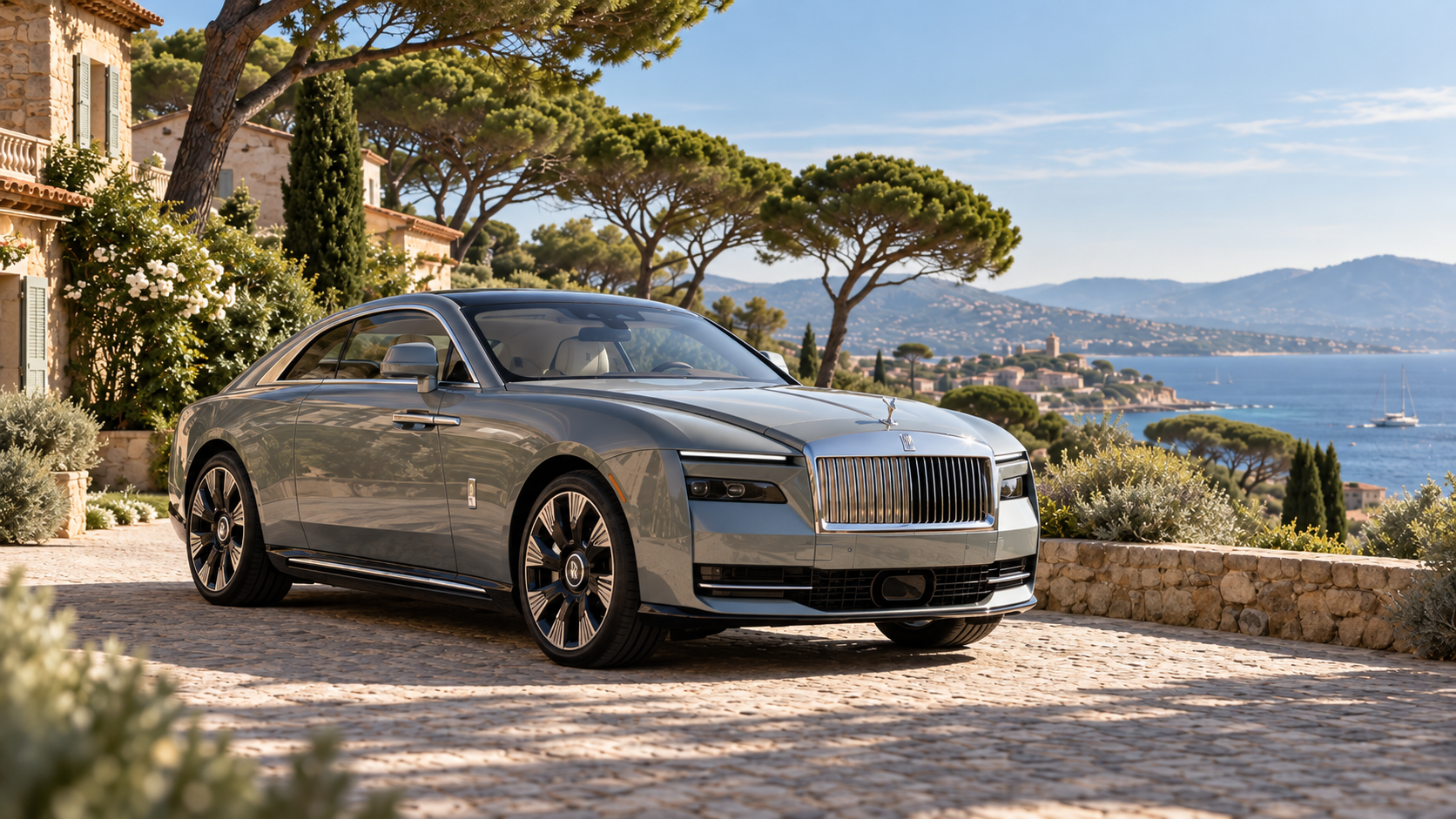
Inside Rolls-Royce’s Biggest-Ever Summer Programme in Saint-Tropez
07.10.2026

Italy’s Police Just Got a 907-HP Lamborghini — and It’s Not for Show
07.10.2026

How to Pay Off Credit Card Debt: Relief and Repayment Options
20.07.2026

Debt Consolidation Loans for Bad Credit: Which Option Fits Your Credit Profile?
20.07.2026

Best Debt Relief Programs of 2026: Companies That Can Help You Settle Unsecured Debt
20.07.2026

The Best Password Managers of 2026: Which One’s Actually Worth Your Money?
13.04.2026

Best ATS Software: 10 Applicant Tracking Systems I Actually Tested
06.04.2026

Best Project Management Software for 2026: Which Tools Your Team Actually Needs
06.04.2026

Best RuPay Credit Card in India: 10 Cards That Actually Reward Your UPI Payments
06.04.2026

Best Remote Desktop Software: 10 Tools I Tested So You Don’t Have To
14.03.2026

Best EOR Services (Employer of Record Services): 10 Providers I Actually Tested
14.03.2026

Best SOP Software for 2026: 10 Tools Compared for Process Documentation
13.03.2026

Top 10 Landing Page Builders With Real Ad Money — Here’s What Actually Converts
13.03.2026

Best Website Builder Software: 10 Platforms Tested, Ranked, and Exposed
13.03.2026

Best Travel Insurance Companies in India 2026: Which One Should You Choose?
11.03.2026

Best Forex Brokers for 2026: Complete Guide to Choosing the Right Trading Platform
11.03.2026

Best Forex Brokers UK: I Tested 10 Platforms
02.03.2026

Best Free Credit Cards in India That Actually Deliver Value
02.03.2026
Best Savings Account in India 2026: Top 10 Banks Compared
02.03.2026

Best Debit Cards in India 2026: Zero Fees, Cashback & Airport Lounge Access
02.03.2026

Best Credit Card for Travel: Top 10 Travel Credit Cards in India 2026
02.03.2026

Best Credit Cards For Lounge Access
02.03.2026

Top 10 Best Forex Brokers in Australia 2026
03.03.2026

Best Car Insurance Companies in India
03.03.2026

Best Two Wheeler Insurance Companies in India 2026 – Complete Review Guide
03.03.2026

Best Trading App in India: My 3-Month Testing Experience with 10 Leading Platforms
03.03.2026

Best Paper Trading App in India: Master Trading Without Financial Risk
03.03.2026

Best Fuel Credit Cards in India: Complete Guide to Maximum Fuel Savings
03.03.2026

10 Best Forex Brokers for Indian Traders in 2026
03.03.2026

Best Forex Brokers Canada in 2026
03.03.2026

Best Business Credit Cards India 2026: Complete Guide for SMEs & Entrepreneurs
03.03.2026